His Eminence the 11th Shingza Rinpoche Lobsang Tenzin Chökyi Gyaltsen
Spiritual Teacher • Scholar • Cultural Preserver
Those who meet Rinpoche often remark not only on his lineage,
but also on his humility, sincerity, and unwavering commitment to benefiting others.
His life reflects the union of deep scholarship, devoted practice, and boundless compassion in service of all beings.
His Eminence the 11th Shingza Rinpoche, Lobsang Tenzin Chökyi Gyaltsen, was born in 1980 in the Tso Ngön region of Amdo, Tibet, into a nomadic family. From an early age, he received a traditional education, developing a strong foundation in Tibetan language, culture, and learning.
In 1993, he was formally recognized by His Holiness the 14th Dalai Lama as the 11th Shingza Rinpoche — the reincarnation of Shingza Achoe, the mother of Je Tsongkhapa, the great Tibetan scholar and founder of the Gelug tradition.
In the Shingza lineage, each successive Shingza Rinpoche traditionally serves as the abbot of Ragya Monastery, one of the most respected Gelug monasteries in the Amdo region of Tibet, founded in 1769. Upon his enthronement at the age of thirteen, Rinpoche assumed this role, becoming the spiritual head of the monastery while still in his youth.
Within the Amdo region, he is regarded as one of the eight principal Rinpoches, reflecting the longstanding recognition of the Shingza lineage within Tibetan Buddhism.
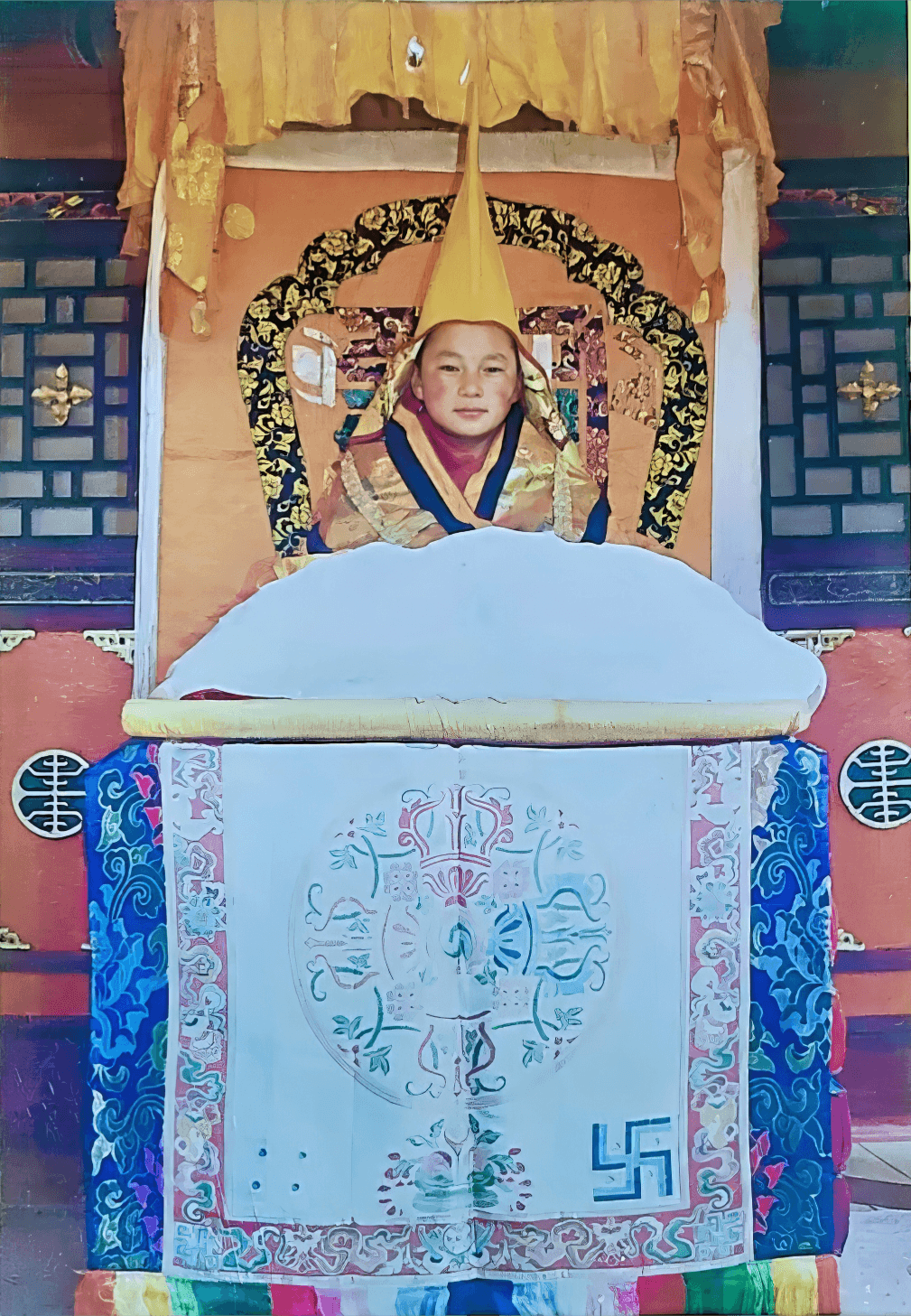
Enthronement at Ragya Monastery, Tibet, 1993
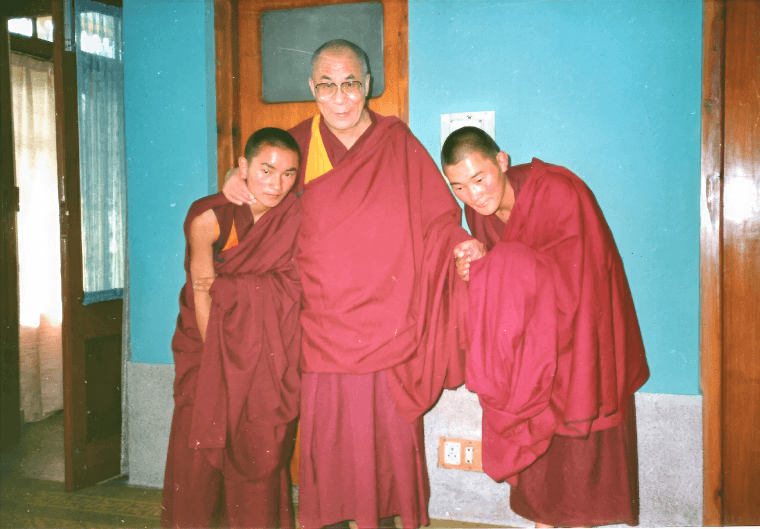
Rinpoche (left) and his brother (right) were received by His Holiness the 14th Dalai Lama in Dharamshala, India, in 1997 following their arrival in exile from Tibet.
To follow His Holiness the 14th Dalai Lama and to seek the freedom to continue his spiritual path and serve his people.
Upon arriving in Dharamsala, he was received by His Holiness, who warmly welcomed him and referred to him as an “Amdo hero.” His Holiness personally entrusted him to the guidance of Khenzur Lobsang Palden, who became his first spiritual mentor outside of Tibet. Under their guidance, Rinpoche continued his monastic education at Sera Jey Monastery, one of the three great Gelug monastic universities in South India. There, he pursued rigorous studies in Buddhist philosophy, dialectics, and classical Tibetan scholarship, and was also recognized as one of the two principal Rinpoches within the Sera Jey community. In 2011, he was awarded the Geshe degree (equivalent to a PhD in Buddhist philosophy) by His Holiness the 14th Dalai Lama.
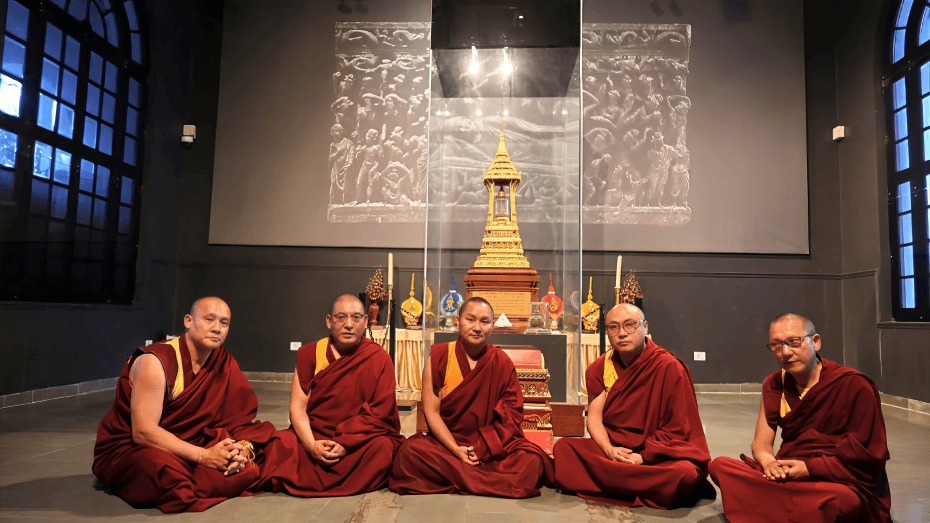
National Museum
Upon arriving in Dharamsala, he was received by His Holiness, who warmly welcomed him and referred to him as an “Amdo hero.” His Holiness personally entrusted him to the guidance of Khenzur Lobsang Palden, who became his first spiritual mentor outside of Tibet. Under their guidance, Rinpoche continued his monastic education at Sera Jey Monastery, one of the three great Gelug monastic universities in South India. There, he pursued rigorous studies in Buddhist philosophy, dialectics, and classical Tibetan scholarship, and was also recognized as one of the two principal Rinpoches within the Sera Jey community. In 2011, he was awarded the Geshe degree (equivalent to a PhD in Buddhist philosophy) by His Holiness the 14th Dalai Lama.
During his years in exile, Rinpoche carried not only the responsibility of his own studies, but also a deep commitment to preserving Tibetan culture and supporting the Tibetan community in exile. He authored several works, founded and edited literary journals, and served as an advisor and editor-in-chief to Tibetan publications. He also initiated cultural gatherings and educational forums—including public debates and poetry recitations—which encouraged younger generations of Tibetans in exile to reconnect with their language, heritage, and identity.
Through these efforts, he played an active role in sustaining the intellectual and cultural life of the Tibetan community beyond Tibet.
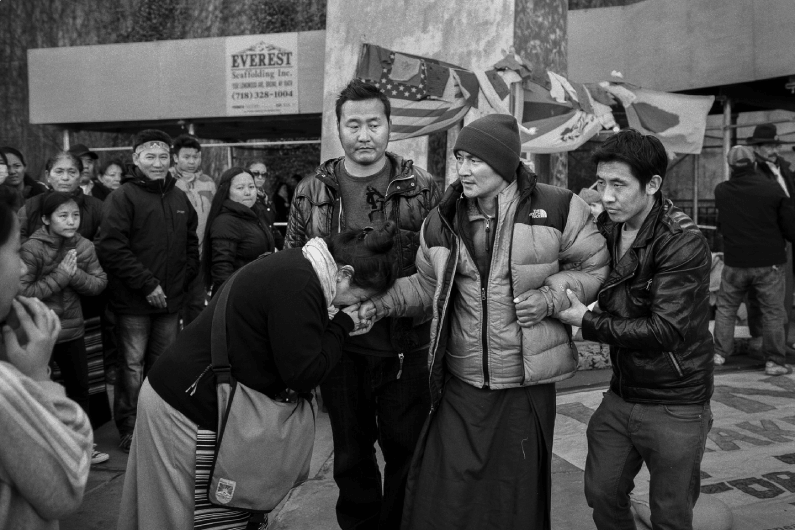
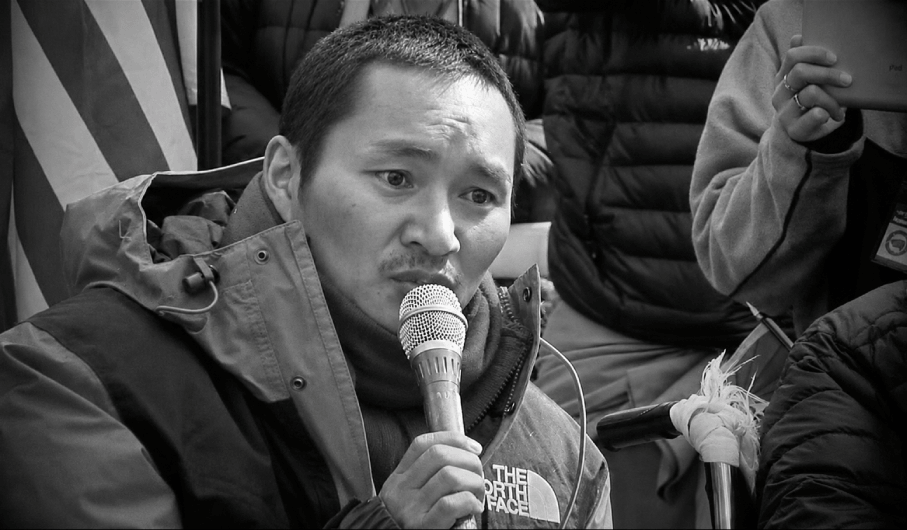
In 2012, Rinpoche took part in a peaceful 30-day hunger strike outside the United Nations headquarters in New York, together with two fellow activists. This effort sought to raise international awareness of the situation in Tibet and to call attention to the challenges faced by the Tibetan people.It was one of the ways in which he has worked to bring Tibetan issues to a broader global audience with courage and a deep sense of responsibility.
New York City, 2012 — during the 30-day hunger strike held in support of Tibet. Photograph by Luke Townsend.
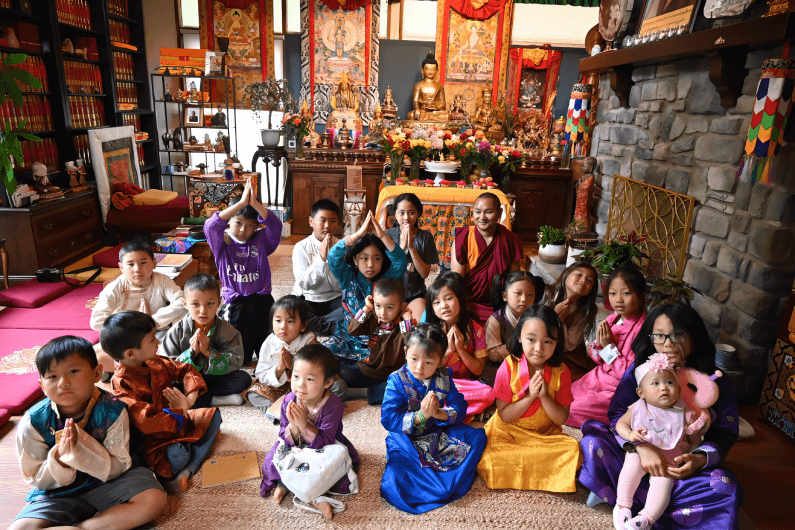
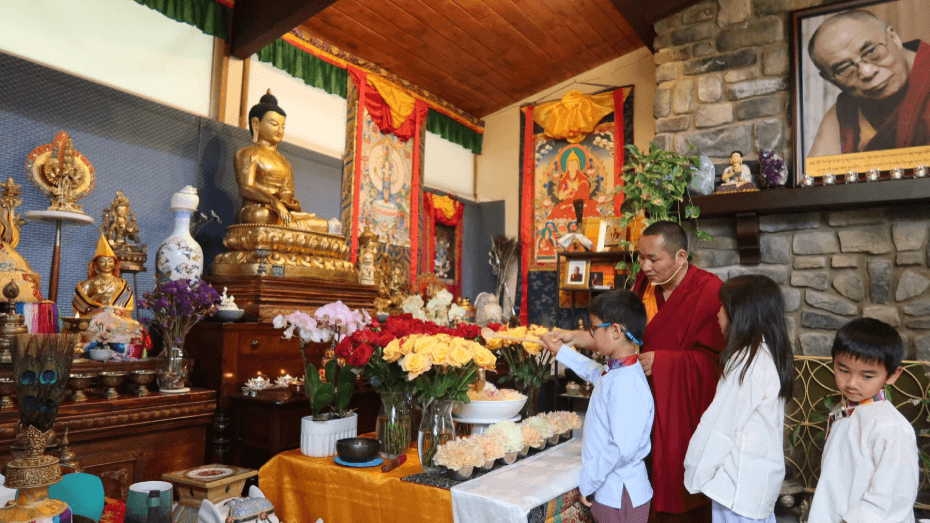
Rinpoche later moved to the United States and founded Ragya Mahayana Buddhist Cultural Center (RMBCC) in Virginia in 2017, with its grand opening held in 2019. Since then, the Center has continued to grow, offering teachings, cultural programs, and community activities.
In many ways, RMBCC can be seen as a continuation of the spiritual and cultural legacy of Ragya Monastery—adapted to a new land and a new generation. Through his teachings and guidance, Rinpoche continues to make the wisdom of Tibetan Buddhism accessible while remaining dedicated to the preservation of his cultural and spiritual heritage.
New York City, 2012 — Rinpoche addressing Tibetans during the 30-day hunger strike held in front of the United Nations.
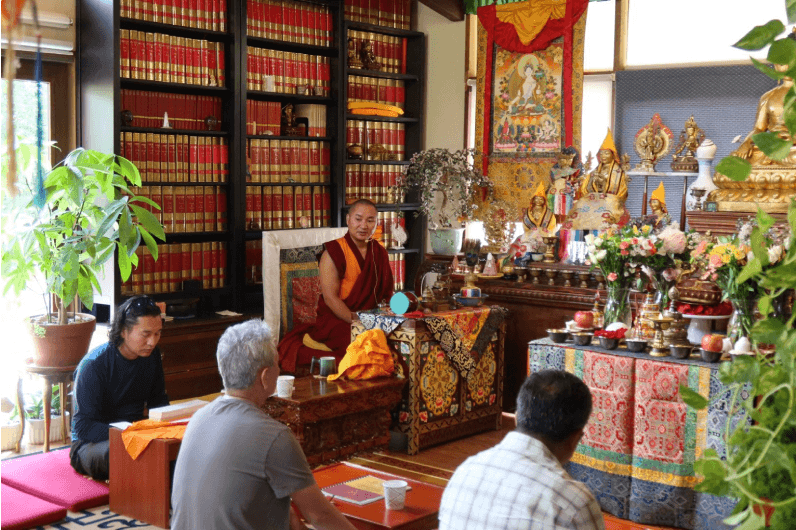
Rinpoche places great emphasis on both the study and practice of the Dharma, and remains deeply committed to teaching and supporting those in need. Since 2017, he has taught extensively on major classical texts, including The Great Treatise on the Stages of the Path to Enlightenment (Lamrim Chenmo), Entering the Middle Way, The Guide to the Bodhisattva’s Way of Life, The Fundamental Wisdom of the Middle Way, The Ornament of the Middle Way, as well as biographies of great Buddhist masters. Among these, the Lamrim Chenmo holds a central place in his teachings and has been taught several times in full. In 2024, the first volume of his commentary—Lecture Notes on the Lamrim Chenmo, Vol. 1 (The Initial Stage)—was published in Taiwan.
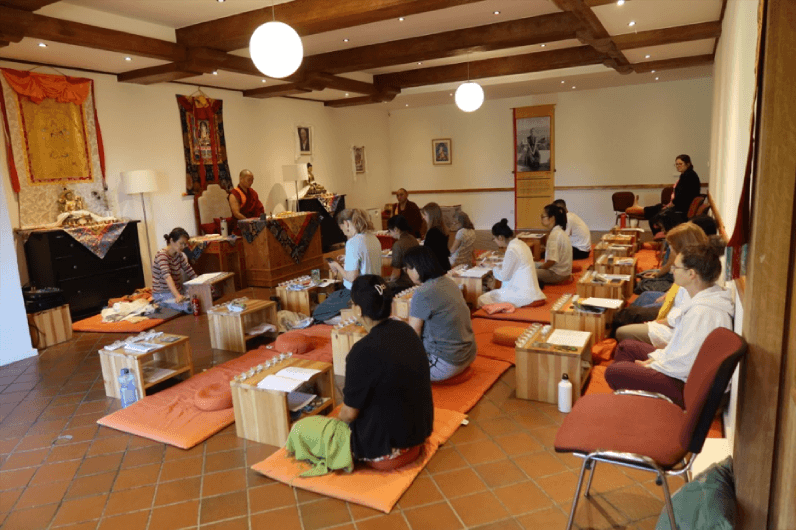
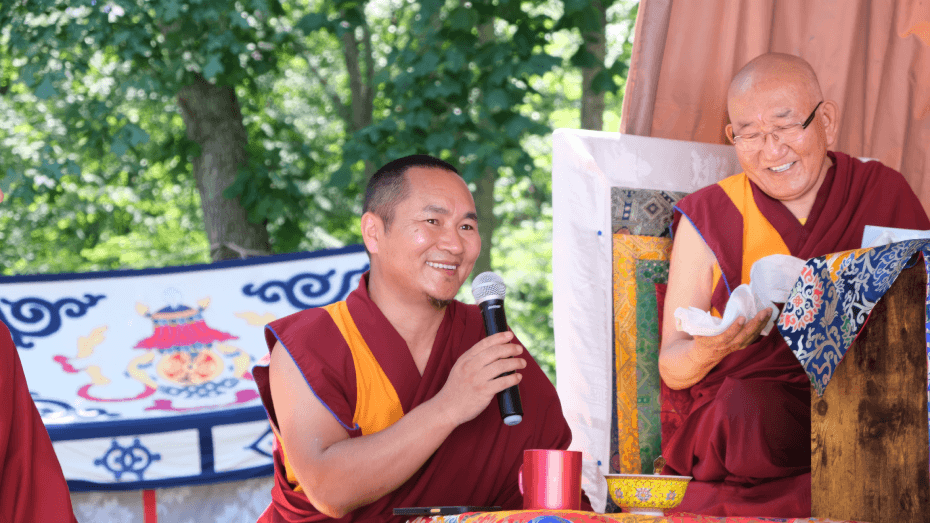
In addition to his teaching, Rinpoche maintains a strong personal commitment to Dharma practice. He regularly offers teachings and meditation guidance to students, often on weekends, making the Dharma accessible to lay practitioners. His classes are offered in English, Mandarin Chinese, and German, supporting students from diverse backgrounds. Rinpoche is frequently invited by monasteries, Dharma centers, and universities to teach, and he consistently responds to these invitations to share the Buddha’s teachings more widely.
Practice is not merely learning with the intellect but allowing the mind and heart to undergo genuine inner transformation.
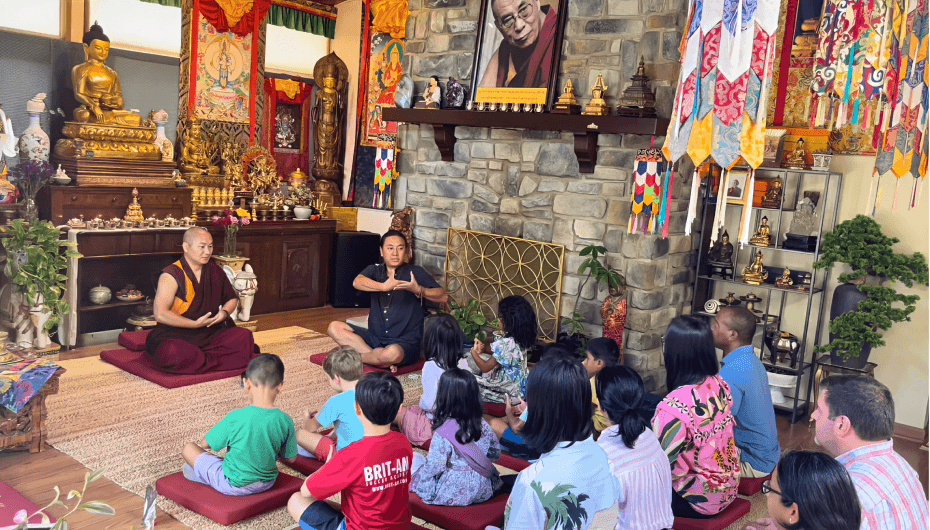
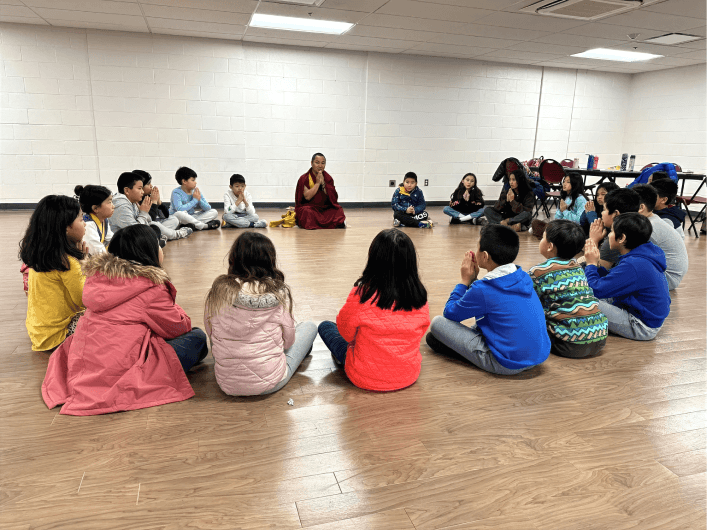
Rinpoche has also devoted significant energy to working with Tibetan youth, recognizing them as the future of Tibetan culture and identity. Every other weekend, he travels to the Washington, D.C. area to teach meditation to Tibetan youth across three different age groups, offering guidance tailored to each stage of their development.
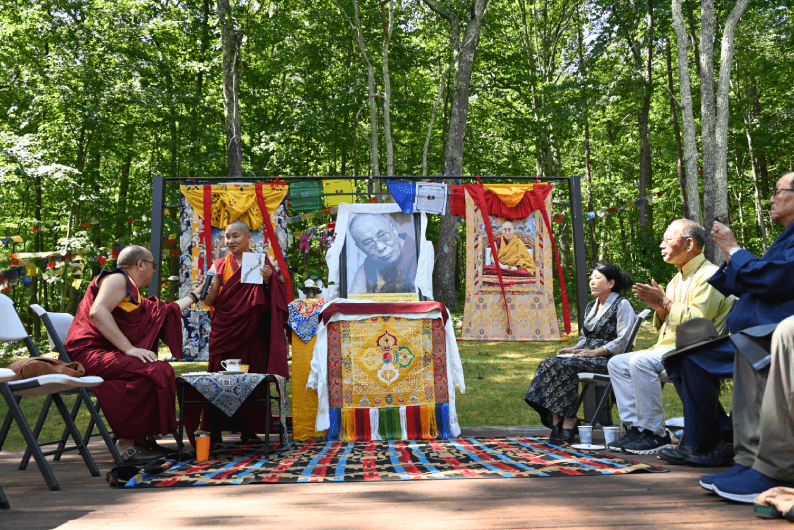
He also initiated Tibet Day, an annual cultural gathering held at RMBCC to celebrate Tibetan heritage and identity. The event attracts participants from the greater Washington, D.C. area, welcoming people from diverse cultural and religious backgrounds.
Those who meet Rinpoche often remark not only on his lineage, but also on his humility, sincerity, and unwavering commitment to benefiting others. His life reflects a quiet continuity between past and present, carrying forward a profound tradition while responding with care to the needs of our time.
His life is a reflection of the Buddha’s compassion and the unbroken wisdom of the Shingza lineage.
Ragya monastery (ra rgya, pronounced Rajia in the Amdo dialect), is the second-largest Buddhist monastery in Qinghai, with over 500 monks.
This website is maintained by students of H.E. the 11th Shingza Rinpoche. Any inaccuracies or omissions are solely our responsibility.
© 2026 Ragya Mahayana Buddhist Cultural Center. RMBCC is a 501(c)(3) nonprofit organization based in Virginia.