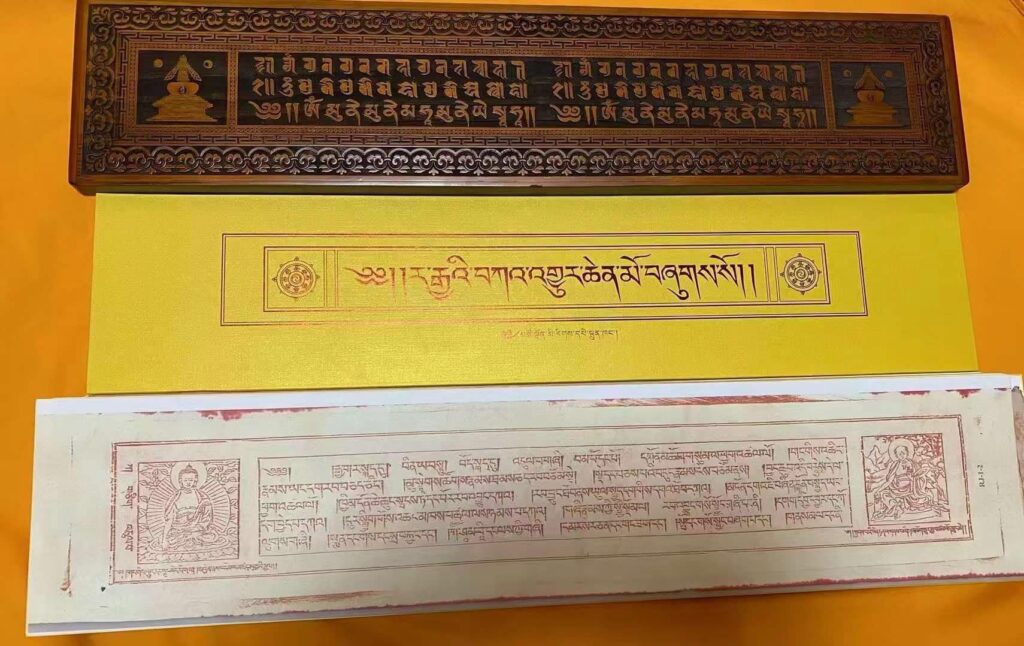
One of the most treasured legacies of Ragya Monastery, the Ragya Kangyur embodies more than two centuries of devotion to preserving and transmitting the Buddha’s teachings.
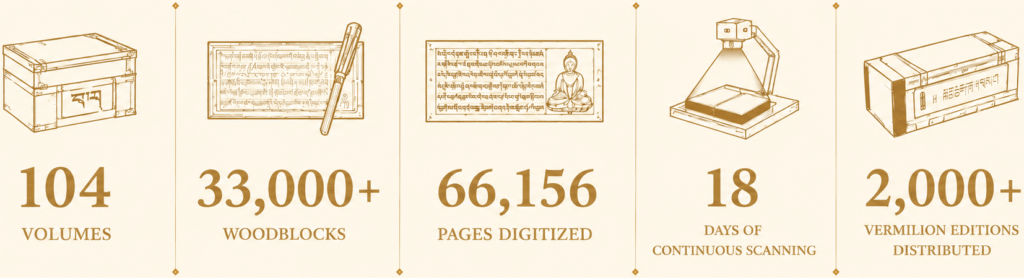
33,000+
Woodblocks
66,000+
Pages
104
Volumes
2013
Rediscovered
More than two hundred years later, the complete 104-volume Ragya Kangyur still survives.
Preserving the Buddha's Words Across Generations
The Ragya Kangyur is one of the most treasured legacies of Shingza Labrang and Ragya Monastery and a remarkable testament to the enduring transmission of the Buddha’s teachings.
The Kangyur (བཀའ་འགྱུར་), meaning “The Translated Words of the Buddha,” is the collection of scriptures traditionally regarded as the teachings of Shakyamuni Buddha. Preserved in Tibetan translation, these texts contain sutras, tantras, and other sacred teachings that form the foundation of Tibetan Buddhist study, contemplation, and practice.
For centuries, Tibetan scholars, practitioners, and monasteries devoted immense effort to preserving and transmitting these teachings. The story of the Ragya Kangyur is part of that living tradition—a story of vision, devotion, preservation, and continuity across generations.
The Vision of the Seventh Shingza Rinpoche
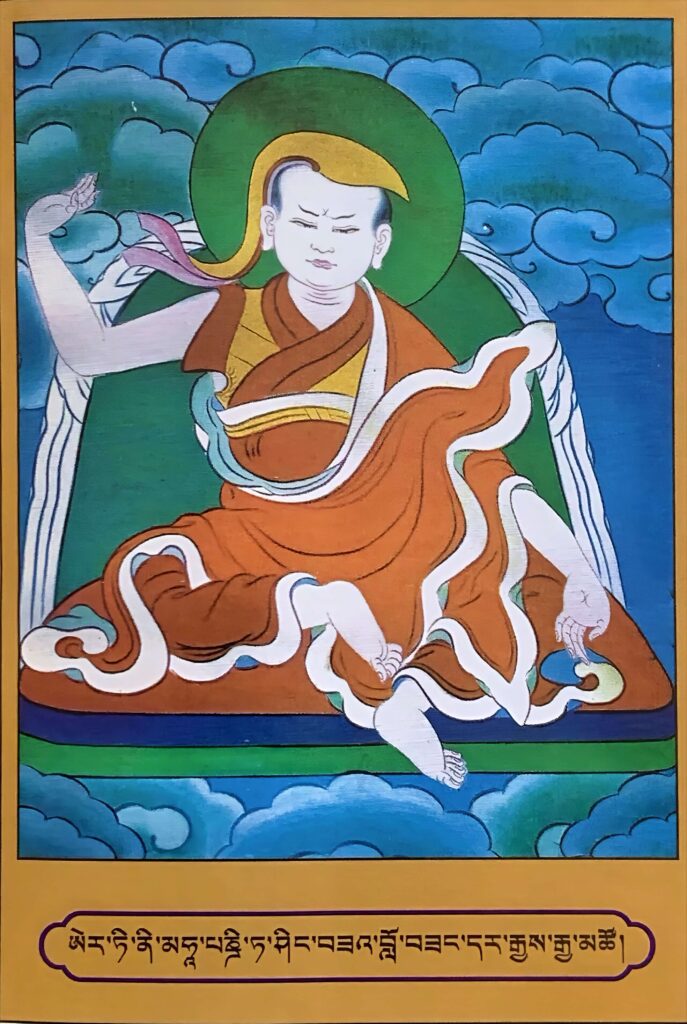
The origins of the Ragya Kangyur can be traced to the extraordinary vision of the Seventh Shingza Rinpoche, Erdeni Maha Pandita Shingza Lobsang Dargye Gyatso (1759–1824).
A renowned scholar, teacher, and spiritual leader of Ragya Monastery, the Seventh Shingza Rinpoche recognized the immeasurable value of preserving the Buddha’s teachings for future generations. Under his guidance, Ragya Monastery undertook the monumental task of producing a complete printed edition of the Kangyur.
More than one hundred artisans, scribes, editors, and master woodblock carvers worked for over a decade to complete the project. Over 33,000 woodblocks were carved, and more than 66,000 pages were printed to create a complete edition of the Buddha’s teachings based on the Dege Kangyur, a renowned edition of the Tibetan Buddhist canon produced in Dege, Tibet between 1729 and 1733. The scale of the undertaking was extraordinary, and the resulting Ragya Kangyur became one of the most significant cultural and religious achievements in the history of the region.
More than two centuries later, the Ragya Kangyur remains one of the Seventh Shingza Rinpoche’s most enduring legacies—a lasting expression of his devotion to the Dharma and his commitment to ensuring that the Buddha’s words would continue to benefit beings far into the future.
Like many religious and cultural treasures of Tibet, the Ragya Kangyur experienced a difficult chapter during the twentieth century.
During a period of profound upheaval, both the printed editions and the original woodblocks disappeared from public view, and for many decades no complete copy was known to exist.
Yet within Ragya Monastery, the legacy of the Kangyur endured. Historical records documenting its creation were preserved, and successive generations of monks continued to honor the vision of the Seventh Shingza Rinpoche and the monumental undertaking he had initiated.
Although the physical volumes had become inaccessible, the memory of the Kangyur remained alive at Shingza Labrang, the historic residence of the successive Shingza Rinpoches and the traditional home of the Ragya Kangyur.
The conviction that the Ragya Kangyur still survived somewhere remained alive within the monastery.
Through faith, perseverance, and dedication to preserving the Buddha’s teachings, the memory of the Kangyur was carefully safeguarded until the opportunity arose to rediscover it.
The story of the Ragya Kangyur would continue—not only through its prints and woodblocks, but through the commitment of those who refused to let its legacy be forgotten.
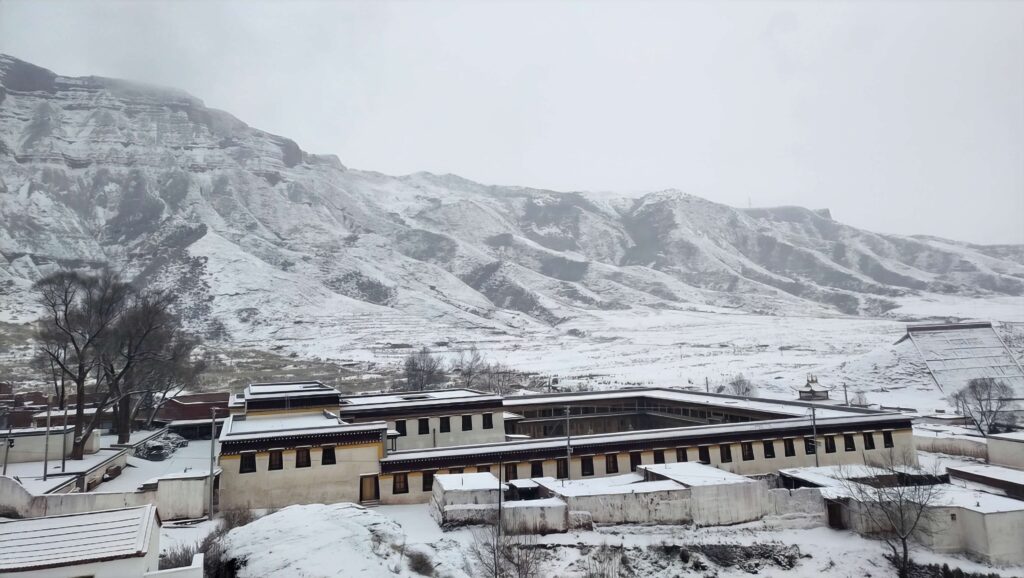
Shingza Labrang at Ragya Monastery, the historic residence of the successive Shingza Rinpoches.
Although the physical volumes had become inaccessible, the lineage of transmission remained unbroken.
Rediscovery of a Precious Treasure
In 2013, after many years of searching, Venerable Jigme Gyaltsen of Ragya Monastery made a remarkable discovery.
At a monastery in eastern Tibet, he identified a complete surviving set of the Ragya Kangyur consisting of 104 volumes. Preserved with great care for generations, the collection had survived intact and remained in excellent condition.
The discovery marked the return of a treasured part of Ragya Monastery’s spiritual and cultural heritage. Nearly two hundred years after its creation, the vision of the Seventh Shingza Rinpoche had endured, allowing the Buddha’s teachings contained within the Ragya Kangyur to once again become accessible.
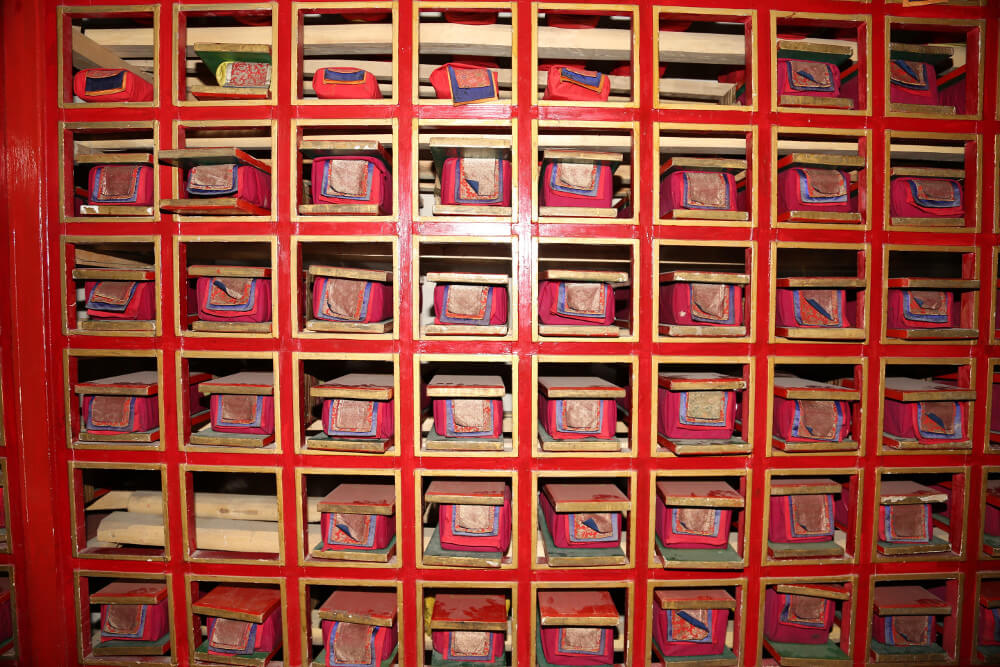
The complete surviving set of the Ragya Kangyur, preserved in a monastery library in Eastern Tibet, where it was rediscovered by Venerable Jigme Gyaltsen in 2013.
The story of the Ragya Kangyur would continue—not only through its prints and woodblocks, but through the commitment of those who refused to let its legacy be forgotten.
Preserving the Kangyur for the Future
Following its rediscovery, the Ragya Kangyur entered a new chapter in its history.
The complete collection was carefully digitized through high-resolution scanning and preserved in digital form to ensure its long-term protection and accessibility.
New printed editions were also produced, allowing monasteries, scholars, and practitioners to once again study and preserve this rare edition of the Tibetan Buddhist canon.
Through these efforts, the Ragya Kangyur is now safeguarded in both traditional and digital formats, helping ensure that future generations may continue to benefit from the Buddha’s teachings.
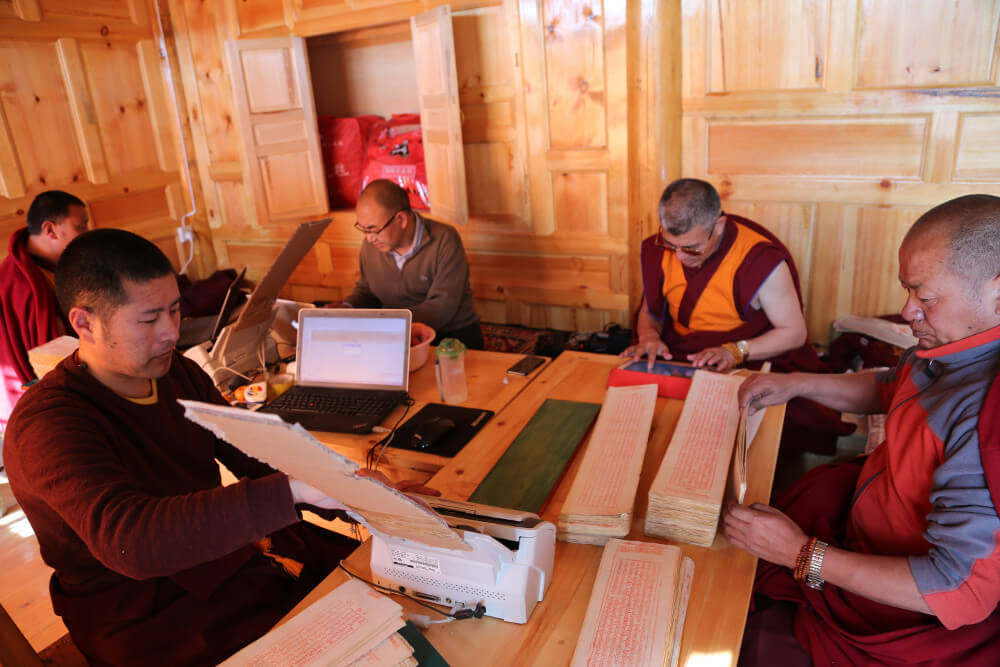
Monks from Ragya Monastery digitizing the 104-volume Ragya Kangyur in collaboration with the BDRC team
Global Access Through Digital Preservation
Today, the complete 104-volume Ragya Kangyur is preserved and accessible through the Buddhist Digital Resource Center (BDRC), ensuring that this precious edition of the Buddha’s teachings remains available to future generations.
Its preservation is the result of the dedication and cooperation of many individuals and organizations, including the monks of Ragya Monastery, Venerable Jigme Gyaltsen, scholars, preservation specialists, photographers, archivists, and the Buddhist Digital Resource Center.
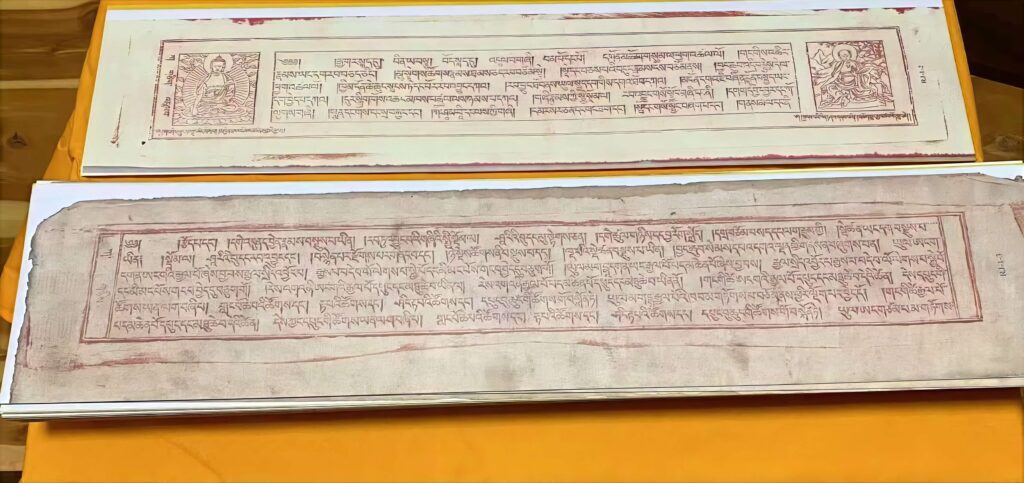
Working around the clock for eighteen days, monks from Ragya Monastery collaborated with the BDRC team to digitize the complete 104-volume Ragya Kangyur, comprising 66,156 pages. Through this effort, the entire collection was carefully scanned, preserved, and made accessible through the BDRC Library.
Today, the Ragya Kangyur can be read, studied, and downloaded by practitioners, scholars, and readers around the world.
What was once preserved on woodblocks and printed pages is now safeguarded in digital form, continuing the transmission of the Dharma into the twenty-first century.
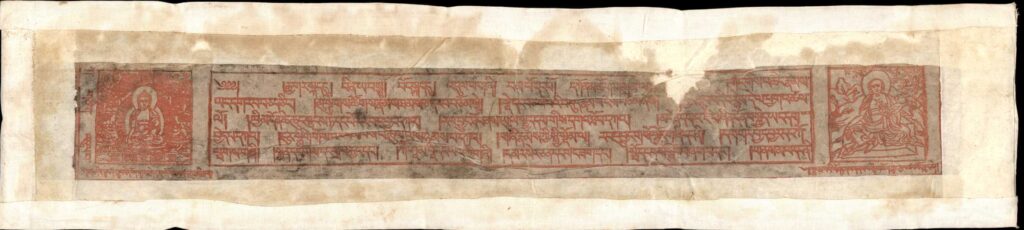
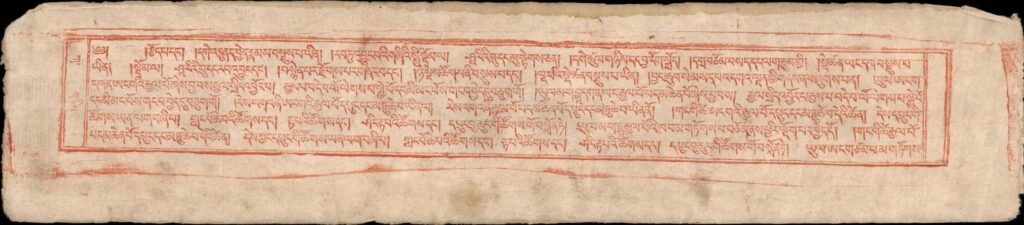
Scan from the Ragya Kangyur. Image courtesy of BDRC Library
Scan from the Ragya Kangyur. Image courtesy of BDRC Library
What was once preserved on woodblocks and printed pages is now safeguarded in digital form, continuing the transmission of the Dharma into the twenty-first century
Convoy of trucks carrying more than 2,000 copies of the special vermilion edition of the Ragya Kangyur from Ragya Monastery for distribution to monasteries, schools, universities, libraries, and cultural institutions.
Sharing the Buddha's Words
Following the digitization and reprinting of the Ragya Kangyur, Ragya Monastery undertook a new effort to ensure that the Buddha’s teachings would continue to benefit future generations.
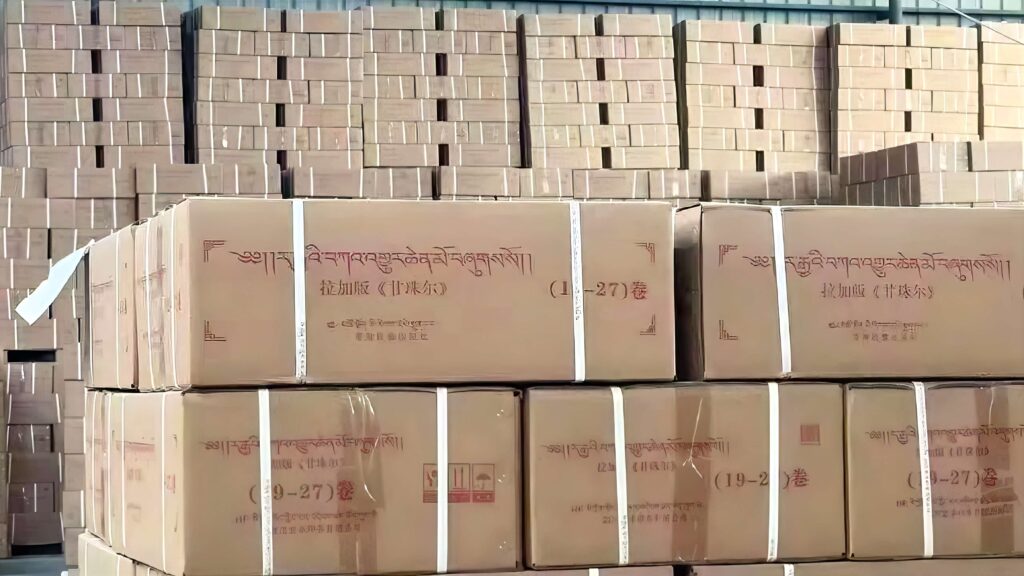
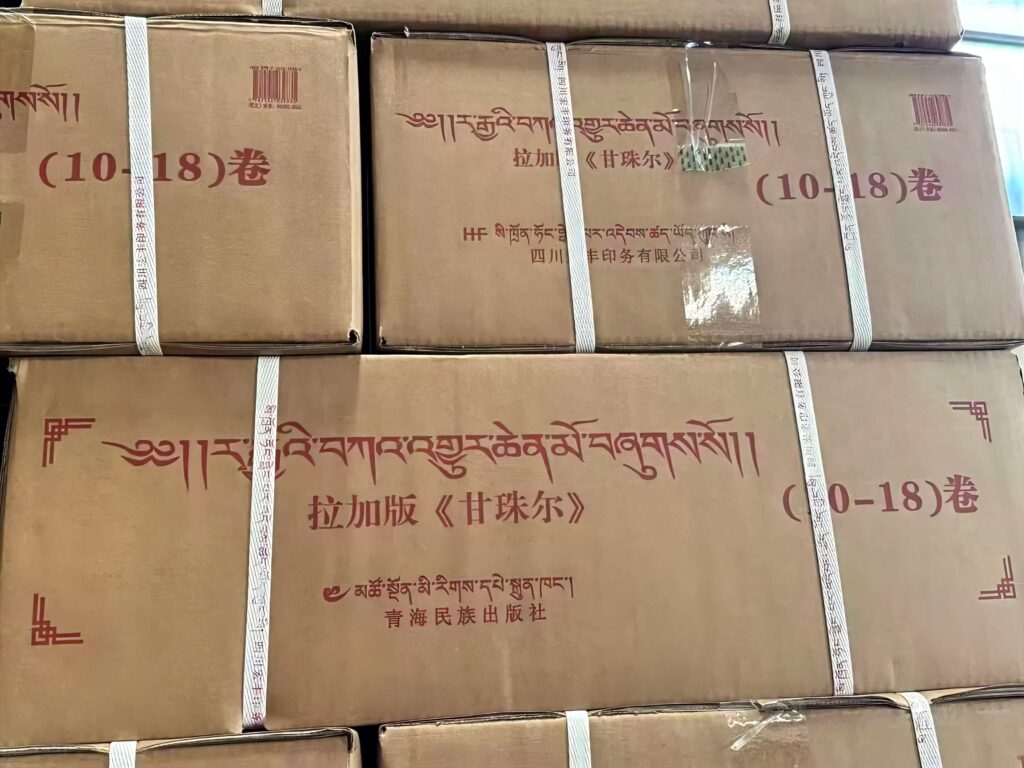
Over 2,000 copies of special vermilion editions of the complete 104-volume Ragya Kangyur were produced and offered free of charge to monasteries, local schools, universities, libraries, and other educational and cultural institutions. Through this initiative, complete sets of the Kangyur were placed in collections where they could be preserved, studied, and accessed by future generations of practitioners and scholars.
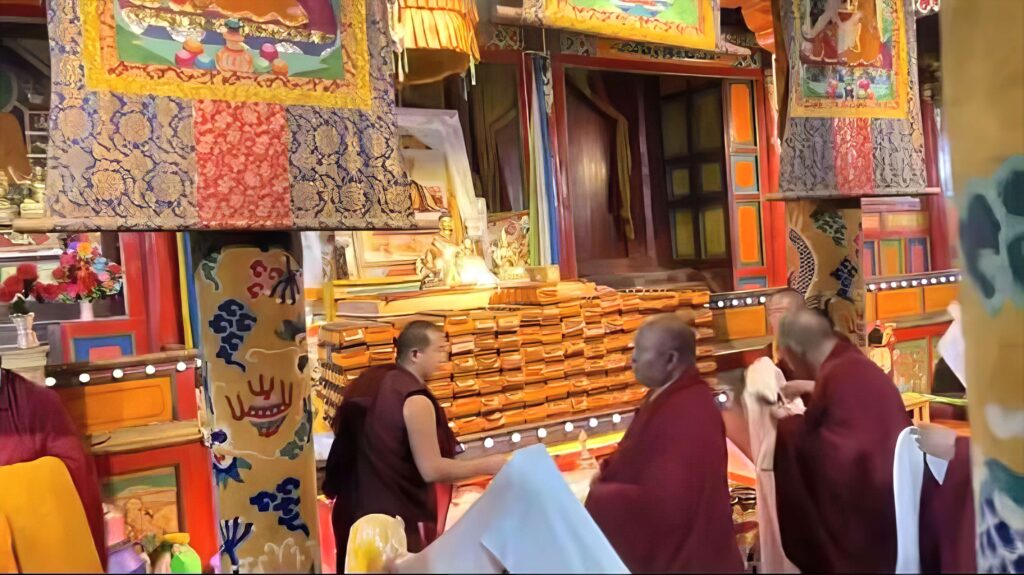
The official distribution ceremony took place on November 22, 2024 at Ngotsar Gelek Gyatso Palace, the main assembly hall of Shingza Labrang at Ragya Monastery.
The choice of venue carried profound significance. Shingza Labrang, the historic residence of the successive Shingza Rinpoches, was the very place where the Ragya Kangyur had been preserved and housed for generations before it disappeared from public view. More than two centuries after the Seventh Shingza Rinpoche first commissioned the project, copies of the restored Kangyur once again departed from the same residence to benefit communities throughout Tibet and beyond.
What began as a monumental undertaking in the early nineteenth century now continues as a living source of learning, inspiration, and spiritual benefit for countless people around the world. The story of the Ragya Kangyur had come full circle.
Vermilion Edition: A traditional printing style in which text is printed in red ink, historically reserved for specially revered editions of Buddhist scriptures.
Boxes containing the special vermilion edition of the Ragya Kangyur, prepared for distribution to monasteries, schools, universities, libraries, and cultural institutions following the reprinting project
Monks of Ragya Monastery participating in the official distribution ceremony of the special vermilion edition of the Ragya Kangyur at Ngotsar Gelug Gyatso Palace, Shingza Labrang, November 22, 2024
More than two hundred years after the Seventh Shingza Rinpoche first commissioned the Ragya Kangyur, copies were once again distributed from Shingza Labrang, where the Kangyur had originally been preserved
A Living Legacy
Today, the Ragya Kangyur stands as more than a historical treasure.
It represents the devotion of the Seventh Shingza Rinpoche, the dedication of generations of monks who preserved its memory, and the perseverance of those who worked to rediscover and protect it.
Its story reflects a timeless truth of the Dharma: that the Buddha’s teachings are transmitted from generation to generation through the efforts, faith, and commitment of countless individuals devoted to their preservation.
More than two hundred years after its creation, the Ragya Kangyur continues to serve as a living bridge between past and present—a testament to the vision of the Seventh Shingza Rinpoche and the enduring power of the Buddha’s words to inspire and benefit beings throughout the world.