The Ragya Sand Mandala
Tradition

An Unbroken Sacred Art Since 1806

For more than two centuries, monks of Ragya Monastery have created sacred sand mandalas using pigments derived from wildflowers, natural minerals, and precious stones gathered across the Tibetan Plateau.

An Unbroken Sacred Art Since 1806

Established in 1806 by the Seventh Shingza Rinpoche, this unique tradition continues uninterrupted to the present day.


Each year, fifteen major sand mandalas are created through a process that combines artistic mastery, Buddhist ritual, environmental stewardship, and profound teachings on impermanence.


From the gathering of materials in the mountains to the final offering of the colored sands into the Yellow River, every stage reflects the profound interconnectedness of nature, spirituality, and devotion.

When people see the finished mandala, they see beauty. When they witness its creation, they glimpse devotion.

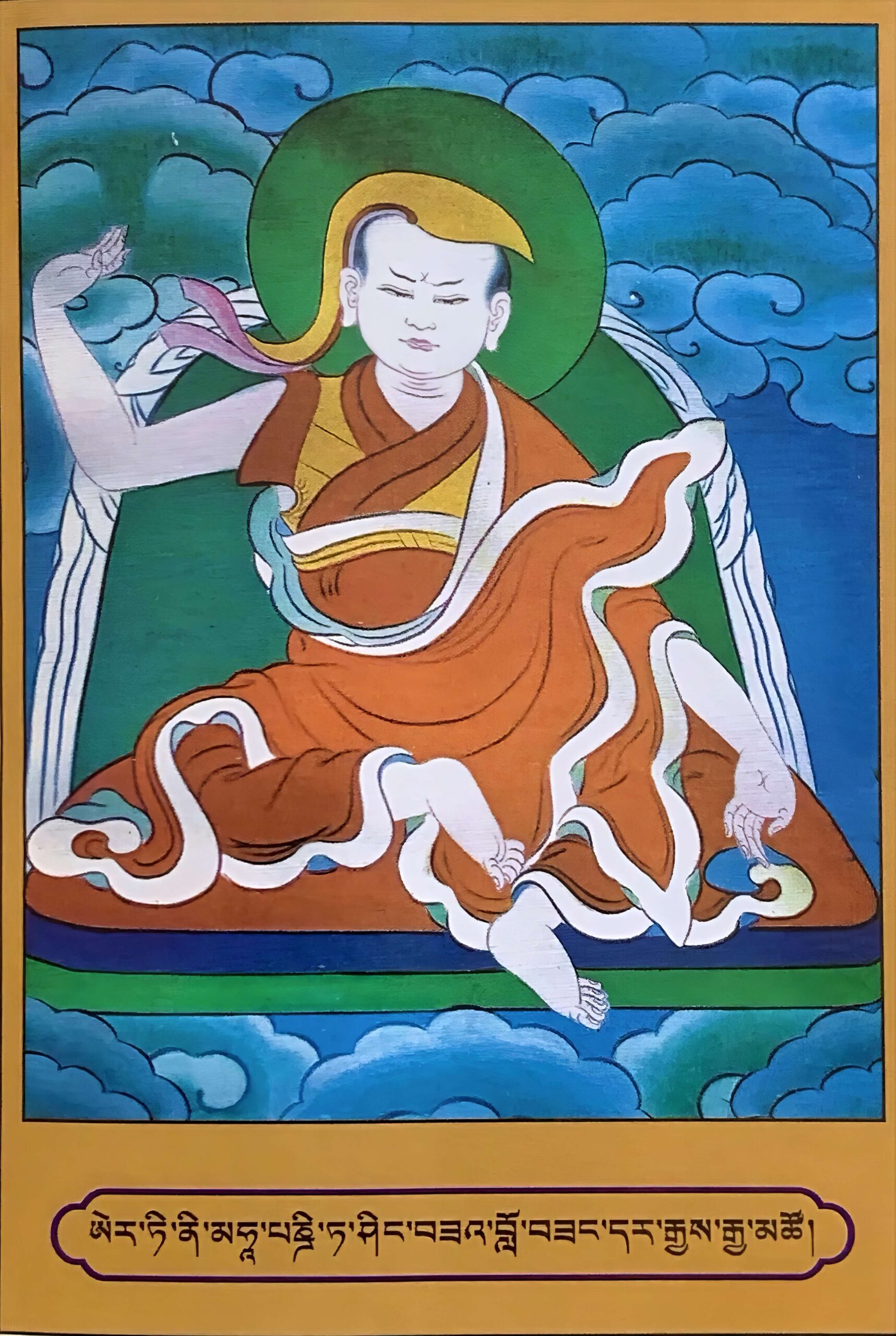
Seventh Shingza Rinpoche, Erdeni Maha Pandita Shingza Lobsang Dargye Gyatso (1759–1824)

A Tradition Established by the Seventh Shingza Rinpoche

The Ragya Sand Mandala tradition traces its origins to the Seventh Shingza Rinpoche, Shingza Pandita Lobsang Dargye Gyatso (1759–1824), one of the most influential figures in the history of Ragya Monastery.

After completing the rigorous Geshe Lharampa degree at Sera Monastery in Lhasa, Tibet—the highest academic degree in the Gelug tradition—the Seventh Shingza Rinpoche returned to Ragya Monastery accompanied by approximately twenty accomplished scholars from the Three Great Monastic Universities and the Two Tantric Colleges.

In 1806, he established the Great Annual Drubchö of Ragya Monastery, a major cycle of tantric practices, sacred ceremonies, sand mandala construction, and fire offerings. At the heart of this observance was the creation of sacred sand mandalas, crafted according to traditional tantric scriptures and ritual procedures.

Over time, the Great Annual Drubchö became one of the defining traditions of Ragya Monastery. More than 220 years later, it remains unbroken. Each year, fifteen major sand mandalas are created as part of the annual observance, preserving a living tradition that has been transmitted continuously from generation to generation since 1806.

Sacred Art Born from Nature

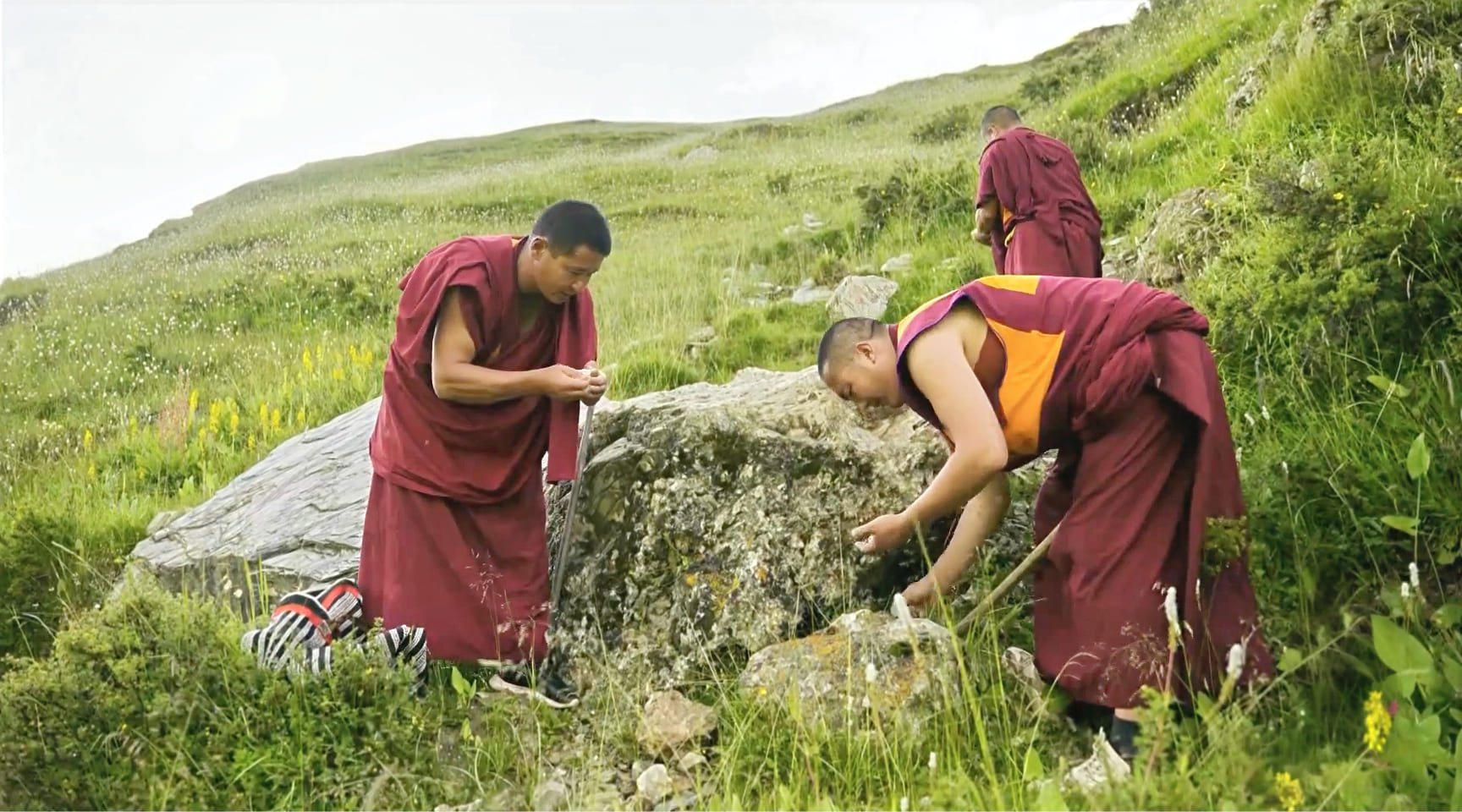
Every year, monks travel to sacred mountains and remote regions to gather the natural materials required for the creation of the sand mandalas. Wildflowers, plants, minerals, and stones are carefully collected according to traditional knowledge passed down through generations.

Collection is carried out with great care and respect for the environment. Flowers are harvested seasonally and selectively, taking only what is needed while avoiding harm to surrounding vegetation and soil. Even in rugged terrain and challenging weather conditions, great attention is given to preserving the natural landscape.

The materials used in the mandalas are entirely natural. Wildflowers provide the pigments that bring vibrant color to the sand. White stone is ground into fine sand, while precious gemstones such as turquoise, coral, agate, and pearls are incorporated into the preparation of the colored sands.

Every grain of sand and every drop of pigment carry a story from the natural world. Gathered from mountains, meadows, rivers, and sacred landscapes across the Tibetan Plateau, these materials embody a centuries-old tradition in which art, spirituality, and nature exist in harmony.

These sands will carry the brilliance of the mandala, but they will also reveal its fragility.

At Ragya Monastery, the sand mandala begins not in the monastery, but on the mountainsides of the Tibetan Plateau.

The Palette of the Tibetan Plateau

Among hundreds of wild species, these and many others provide the natural hues that become the colors of the mandala.

Since 1806, Ragya’s sand mandalas have been created using colors derived entirely from natural materials, without the use of artificial pigments.

Colors of the Tibetan Plateau

Different flowers bloom in different regions, seasons, and elevations across the vast Tibetan Plateau.

Drawing on knowledge accumulated over generations, monks of Ragya Monastery travel to sacred mountains and remote valleys to gather the flowers used in the preparation of natural pigments. Some are collected from the protector mountain of Ragya Monastery, while others are gathered from distant regions including the revered mountains of Amnye Machen and Nyenpo Yutse.

The collection process requires patience, experience, and an intimate knowledge of the landscape. Monks know where particular flowers bloom, when they reach their peak color, and how they may be harvested responsibly. Before picking a flower, insects resting upon it are gently encouraged to move away, and only the petals needed for pigment preparation are collected, helping to preserve the surrounding vegetation and ecosystem.

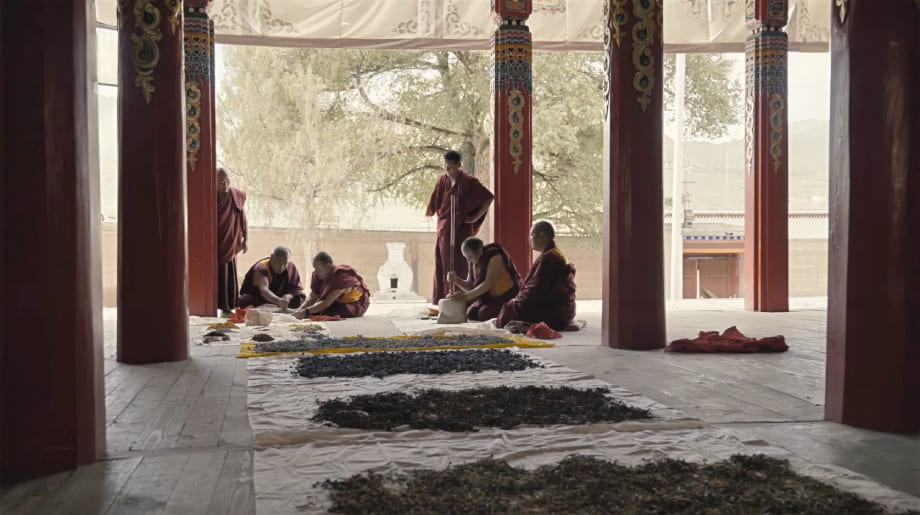
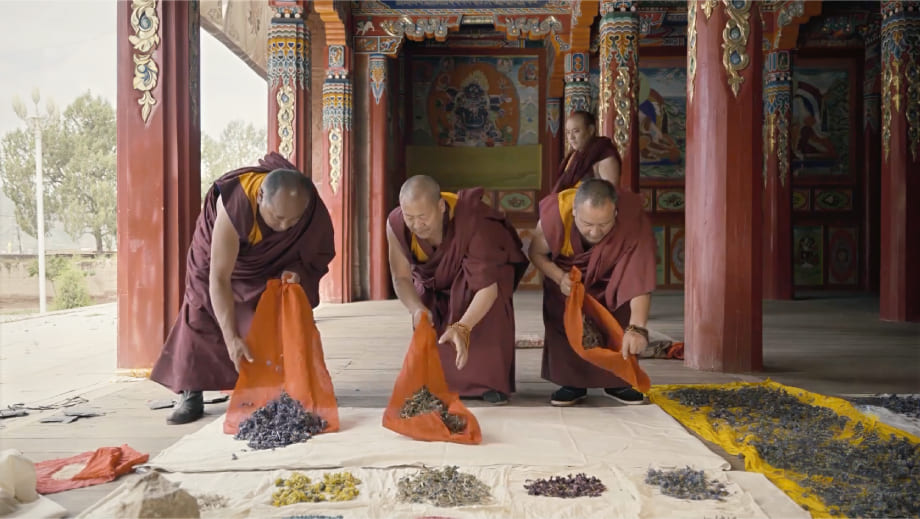
Once gathered, the flowers are carefully sorted according to color and dried in preparation for the next stage of the process. Through these simple blossoms, the colors of the Tibetan Plateau are transformed into the vibrant pigments that will eventually become part of the sacred mandala.
Colors of the Tibetan Plateau
Colors of the Tibetan Plateau2

Monks at Ragya Monastery sorting dried wildflowers collected from the Tibetan Plateau. The flowers are carefully prepared before being transformed into the natural pigments used to create the sand mandala. Image courtesy of CCTV, About the Great Rivers documentary.
From Stone to Sand

The foundation of every mandala is fine sand produced through a labor-intensive process.

From Stone to Sand

Monks from Ragya Monastery collecting white stones. These stones are later crushed, refined, and transformed into the fine sand used in the mandala. Image courtesy of CCTV, About the Great Rivers documentary.
01

Grinding Stone

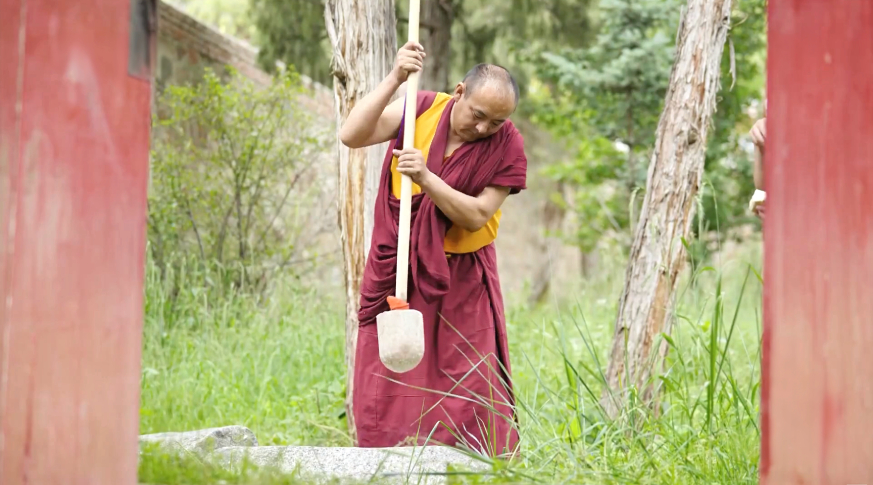
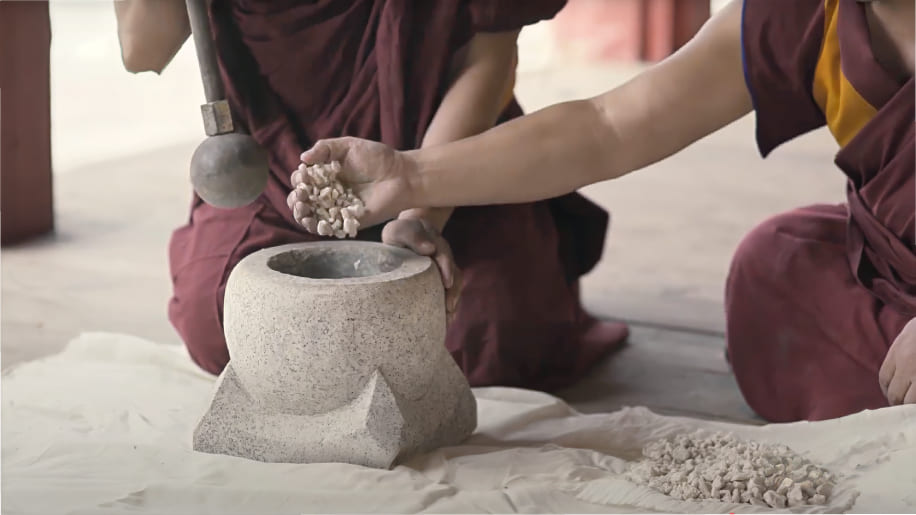
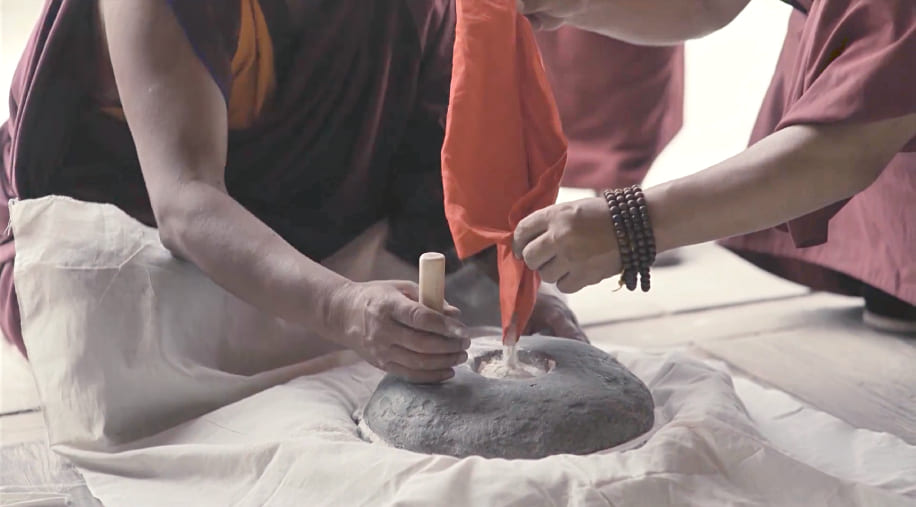
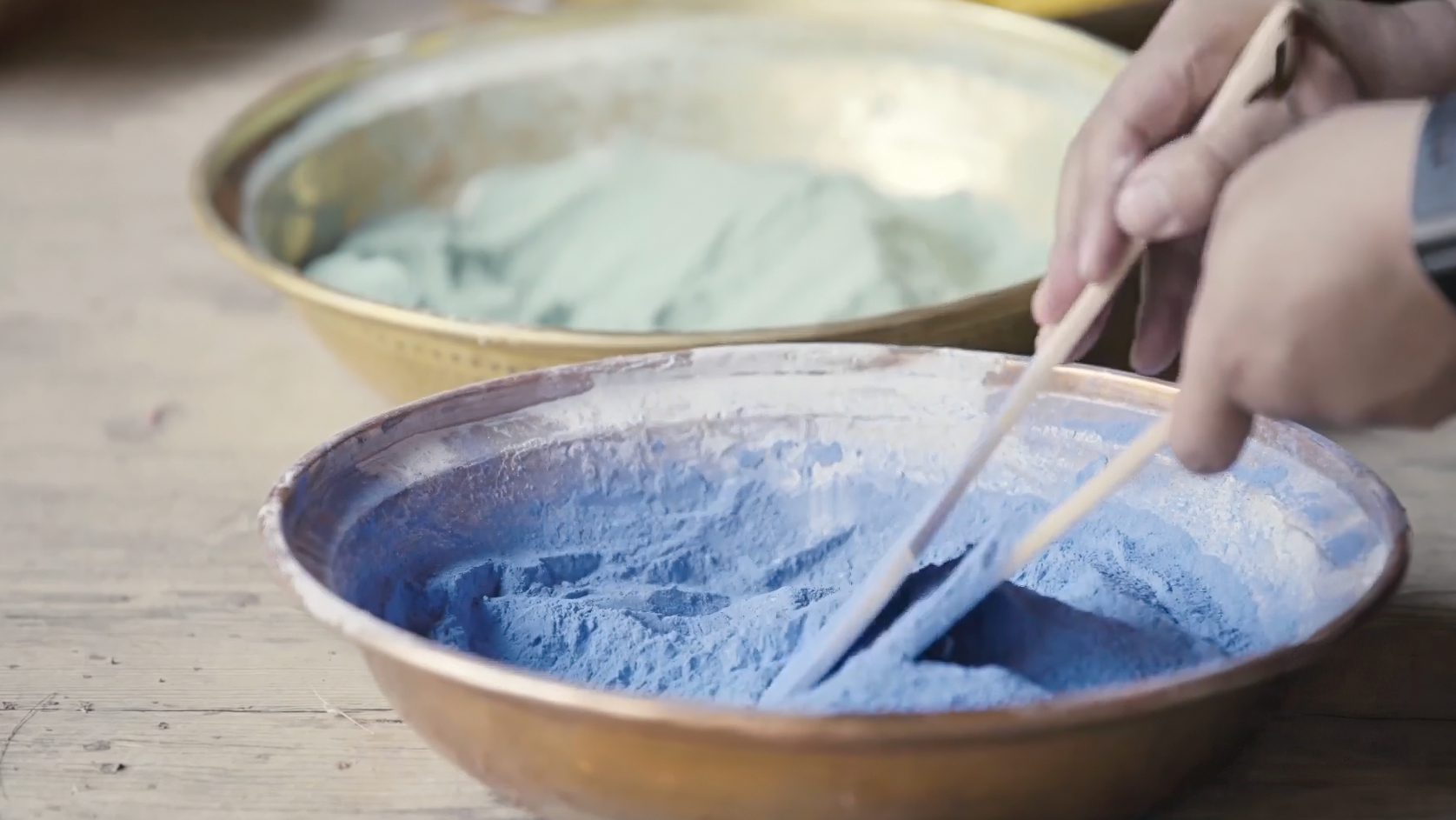
Natural white stone is collected and brought back to Ragya Monastery, where it is broken, crushed, and repeatedly ground by hand until it becomes an exceptionally fine powder. Additional materials such as pearls, agate, red coral, turquoise, and other precious gemstones are also carefully ground into powder.

Grinding Stone

02

Refining the Pigments

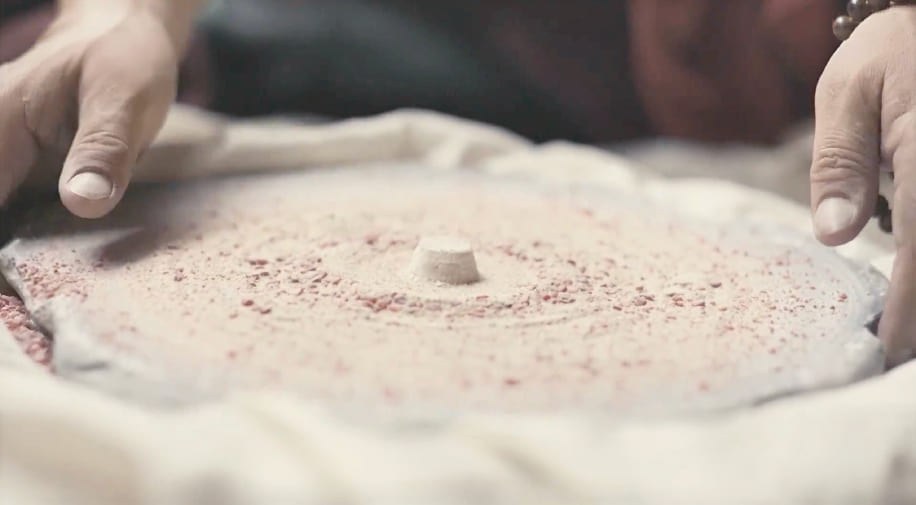
The powders are then washed, settled, filtered, dried, and refined before they can be transformed into mandala sand. By the end of the process, only a fraction of the original material remains.

03

Preparing the Pigments

Every grain of sand represents hours of patient effort. Through countless cycles of grinding, refining, and preparation, ordinary stone and precious materials are transformed into the foundation of a sacred work of art.

Preparing the Pigments
brilliance of the mandala

These sands will carry the brilliance of the mandala, but they also reveal its fragility. It is through this process that we are reminded that beauty arises through causes and conditions, and that all things, no matter how exquisite, are ultimately impermanent.

04

Gemstones, Minerals, and Natural Pigments

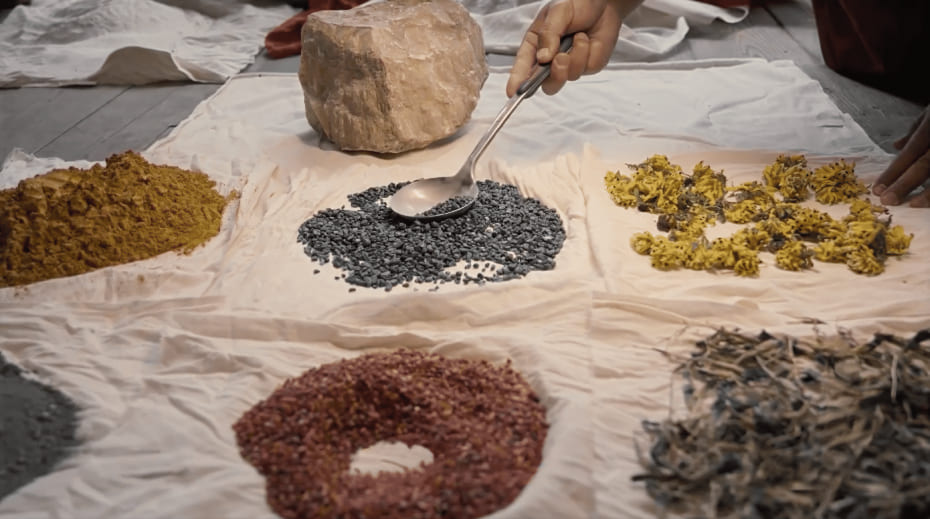
Ragya monks carefully prepare the ingredients used in the colored sands, including finely ground stone, dried wildflowers, and gemstones such as turquoise, coral, agate, and pearls. These materials are refined and blended according to traditional methods before being incorporated into the mandala.
Gemstones, Minerals, and Natural Pigments

Every grain of sand begins in the landscape. Before it becomes part of a mandala, it first belongs to the sacred mountains of the Tibetan Plateau.

Creating Natural Pigments

The colors of a Ragya sand mandala tell the story of nature.

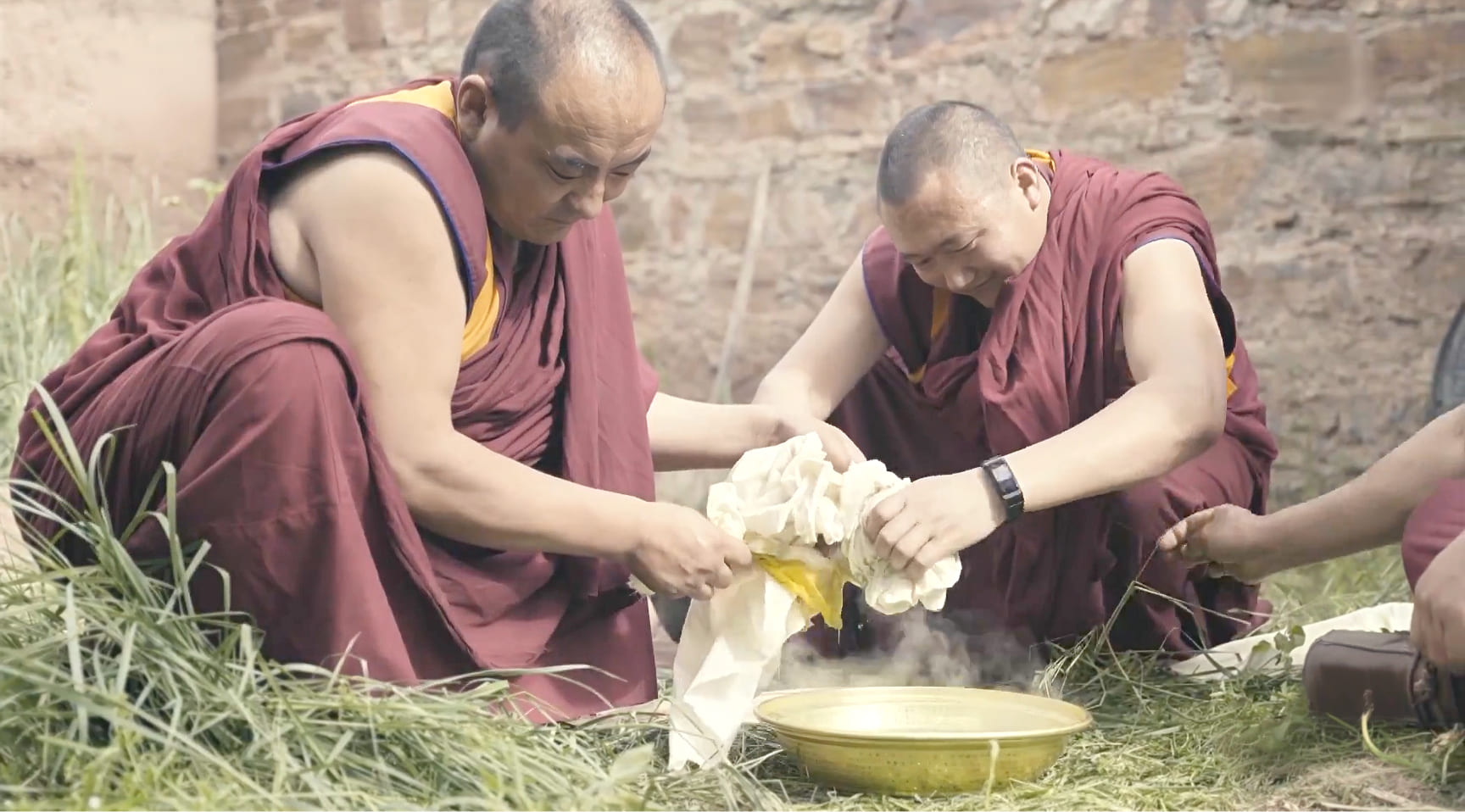
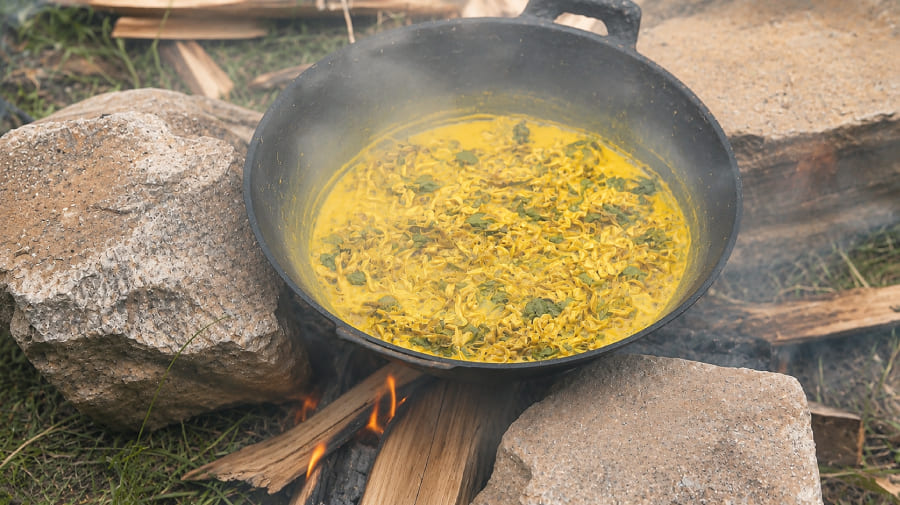
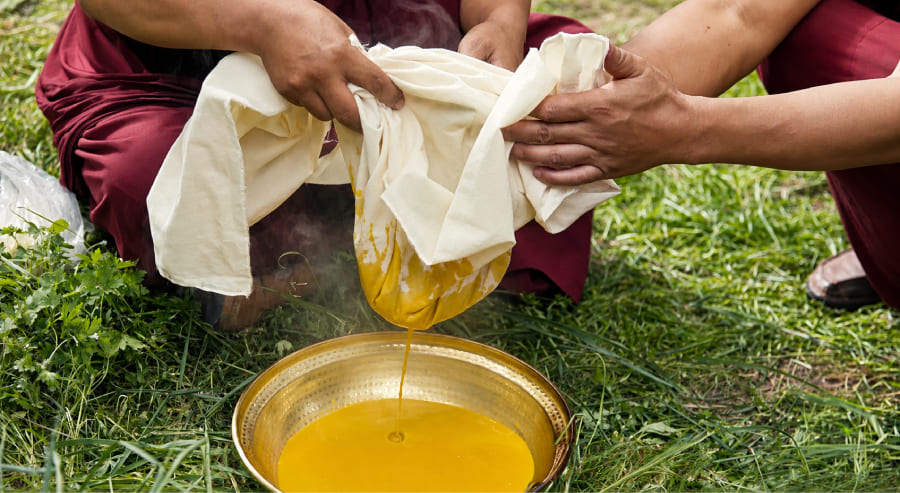
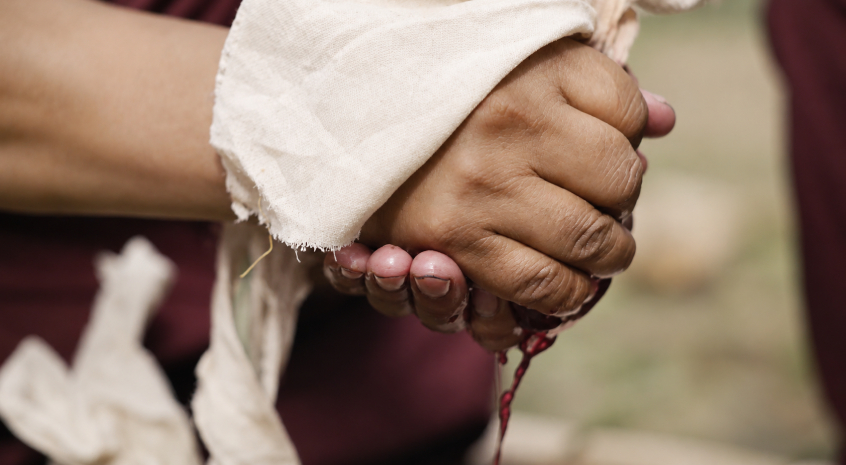
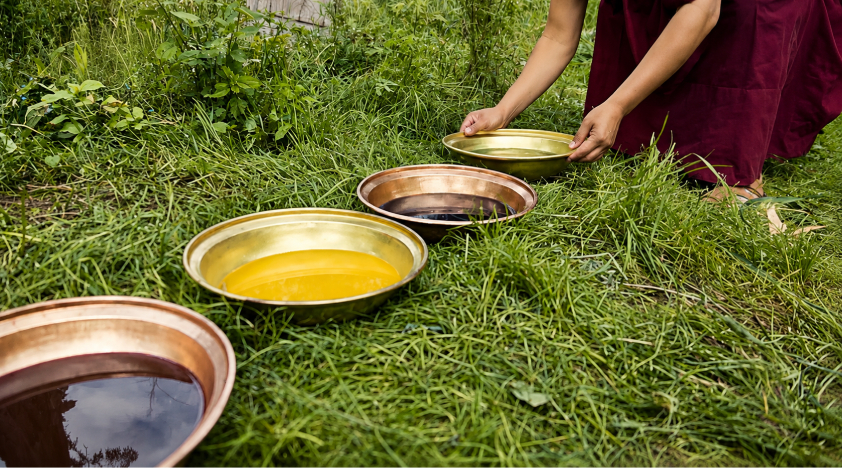
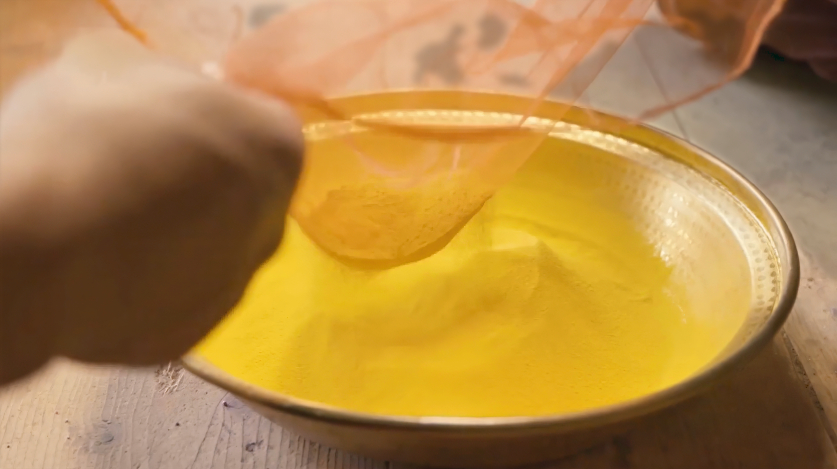
Flowers gathered from across the Tibetan Plateau are carefully boiled to extract their pigments, producing richly colored natural dyes. These dyes are then blended with the finely prepared sand until every grain absorbs the color.

Creating Natural Pigments

The boiled essence of wildflowers is carefully strained to create natural yellow pigment. This dye will later be used to color the finely prepared sand for the mandala. Ragya Monastery. Image courtesy of CCTV, About the Great Rivers documentary.
The colored sand is dried, crushed once again, and carefully sorted in preparation for the creation of the mandala.
From Nature, With Devotion

From Nature, With Devotion1
From Nature, With Devotion2
From Nature, With Devotion3
From Nature, With Devotion4
From Nature, With Devotion5
From Nature, With Devotion6

Flowers, roots, minerals, and earth are gently transformed through time-honored methods.
Boiled, washed, strained, dried, and mixed—each step is an act of care and respect.
From these humble elements emerge colors that carry the essence of the land.

Traditionally, five principal colors are prepared: White, Yellow, Red, Green, and Blue. In Tibetan Buddhism, these colors carry rich symbolic meaning and are traditionally associated with the Five Buddha Families and the Five Wisdoms.

Through variations in tone and intensity, the palette expands into more than a dozen distinct colors used in the final mandala. What began as wildflowers blooming on distant mountainsides is transformed into the vibrant sands that bring the sacred mandala to life.
Constructing the Mandala

The creation of a sand mandala is both an artistic and spiritual practice.

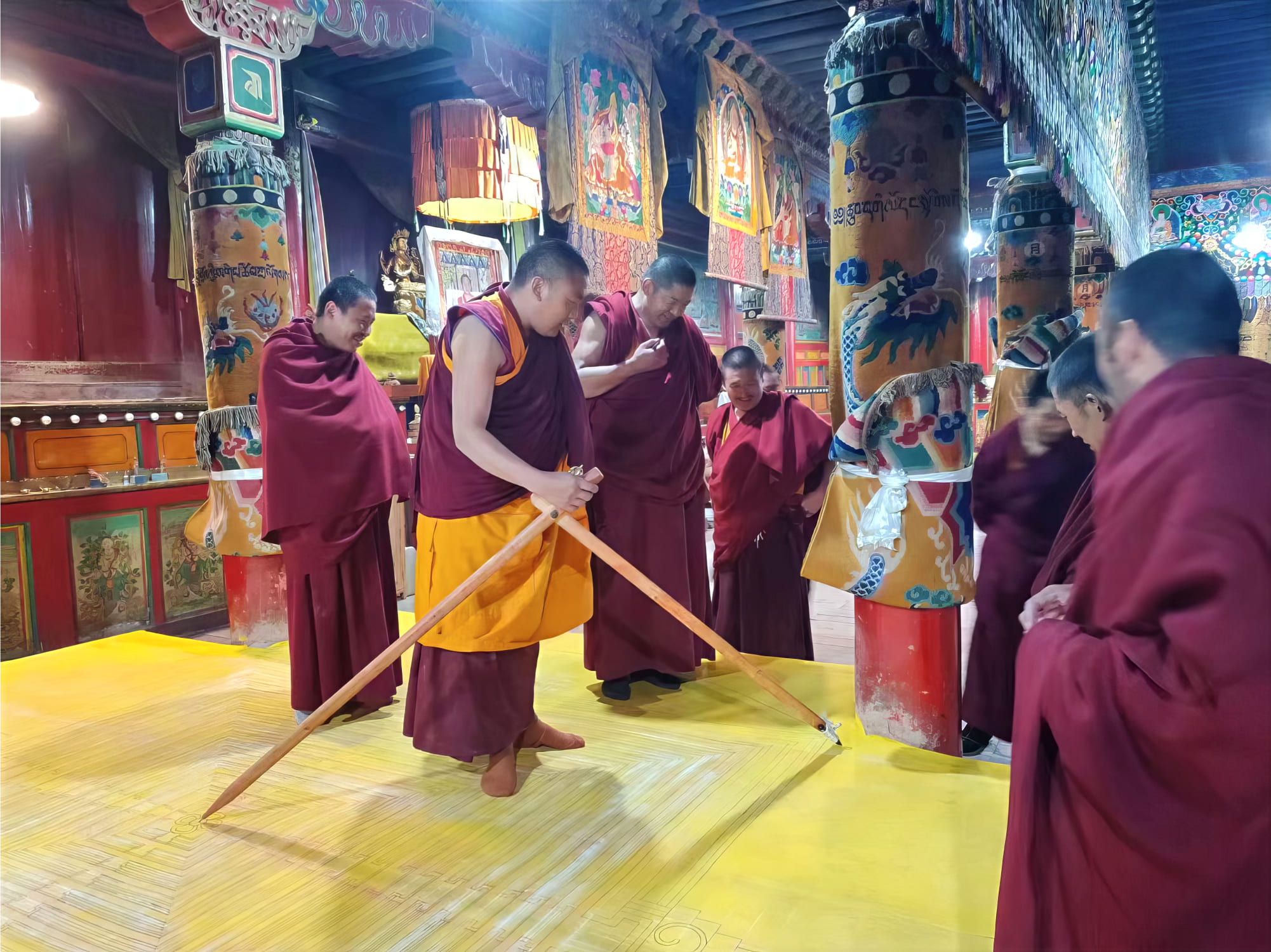
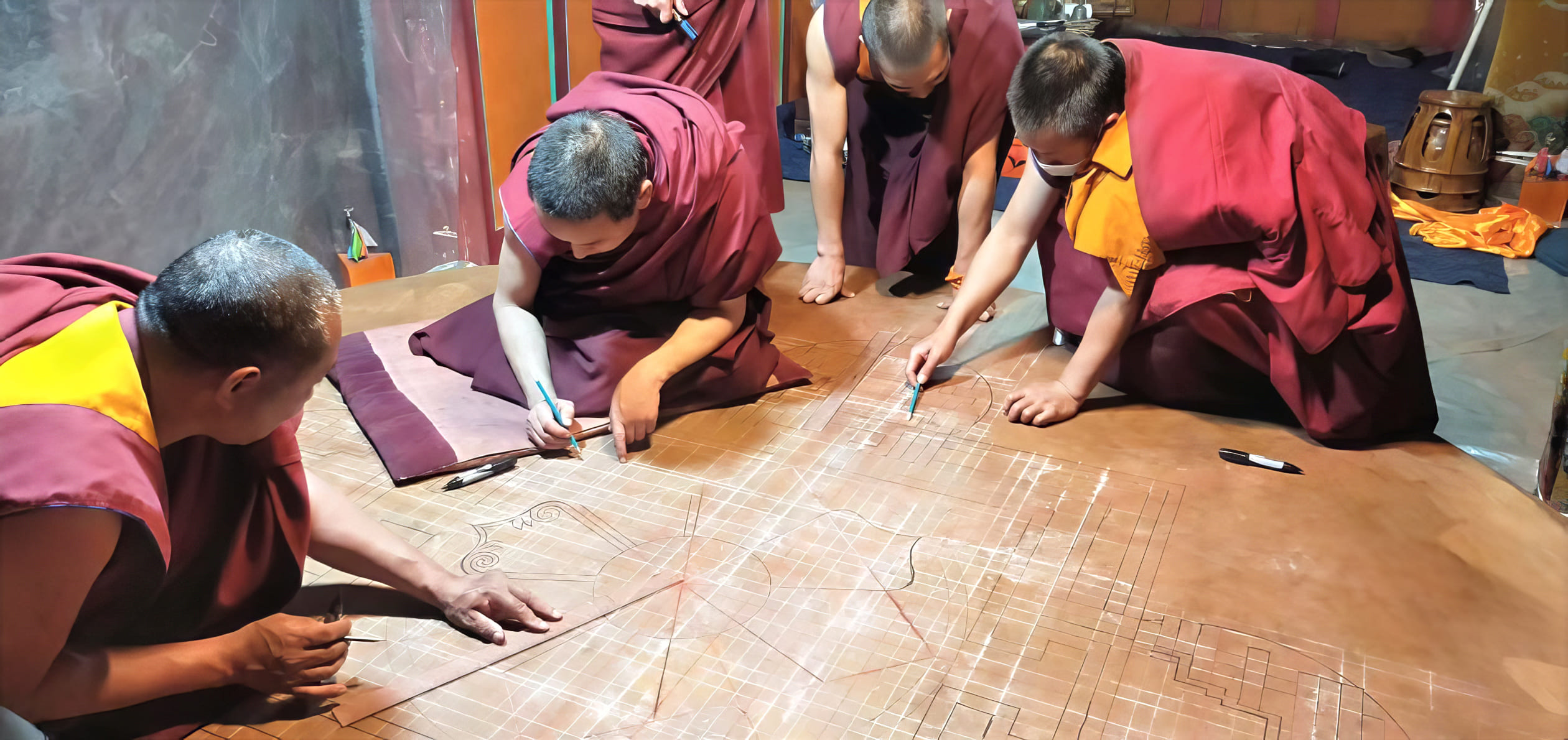
The process begins with the careful layout of an intricate geometric design based on traditional measurements preserved in Tibetan Buddhist tantric texts. Every line, proportion, and symbolic element must be precisely positioned before the placement of a single grain of colored sand.

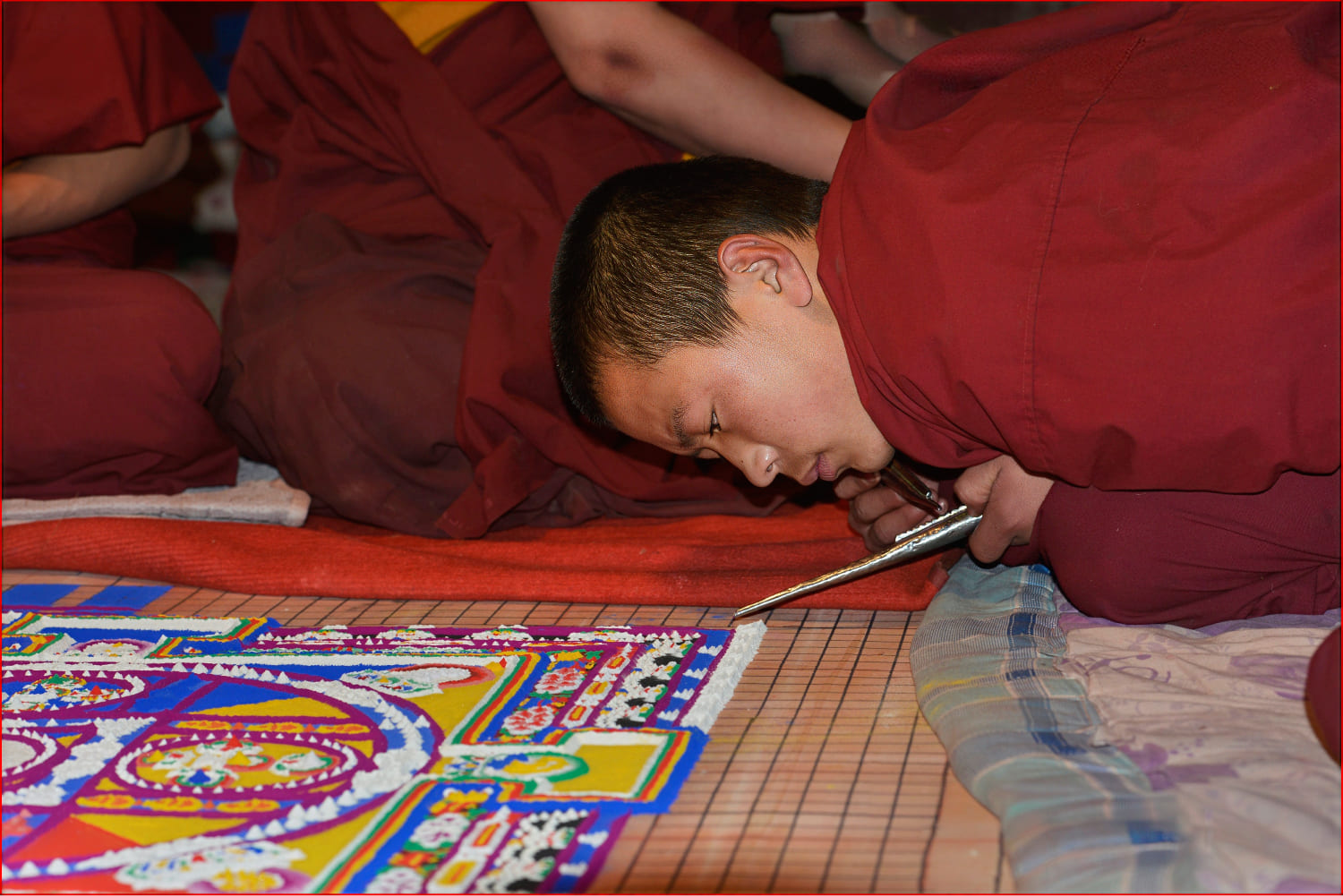
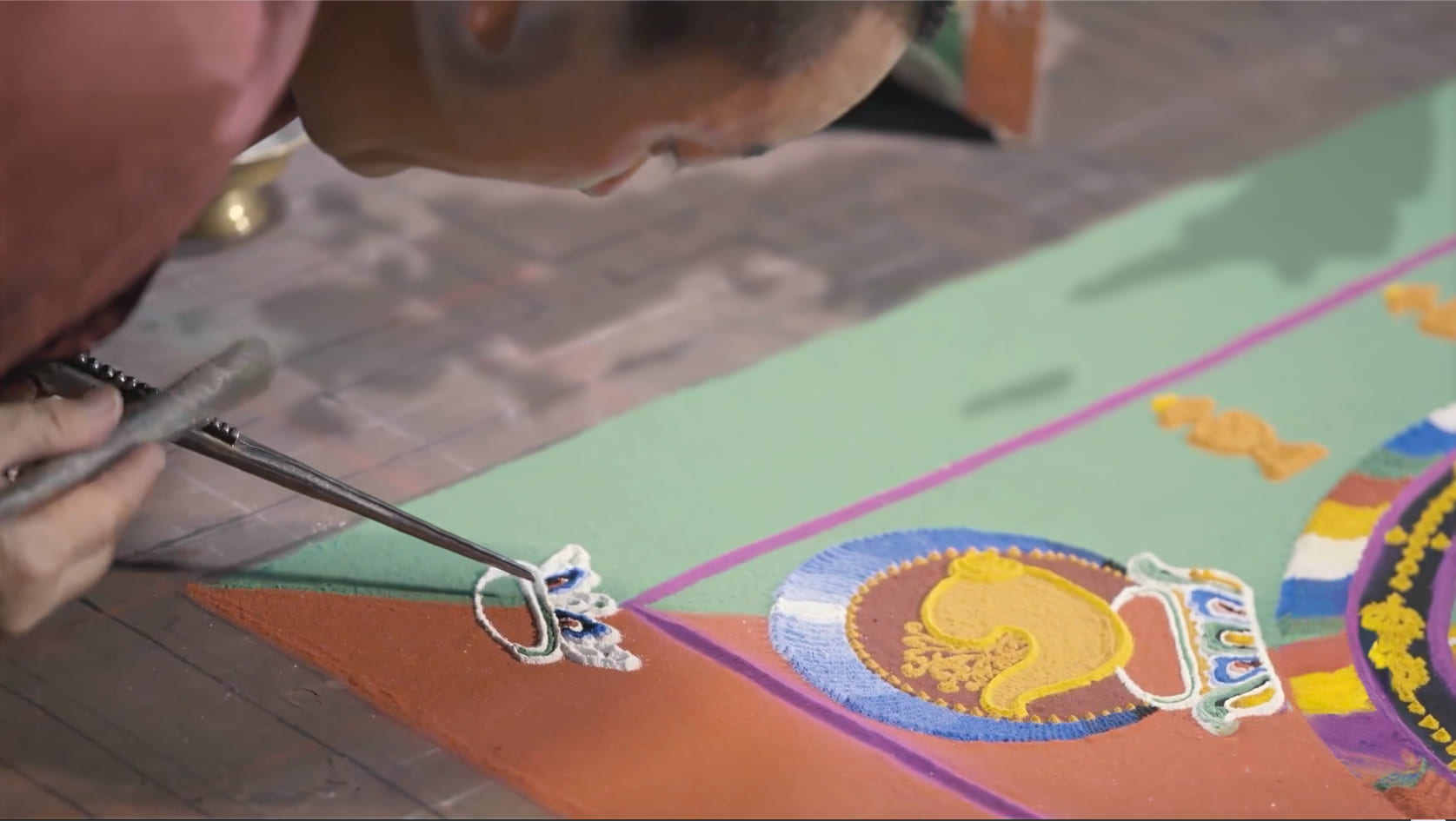
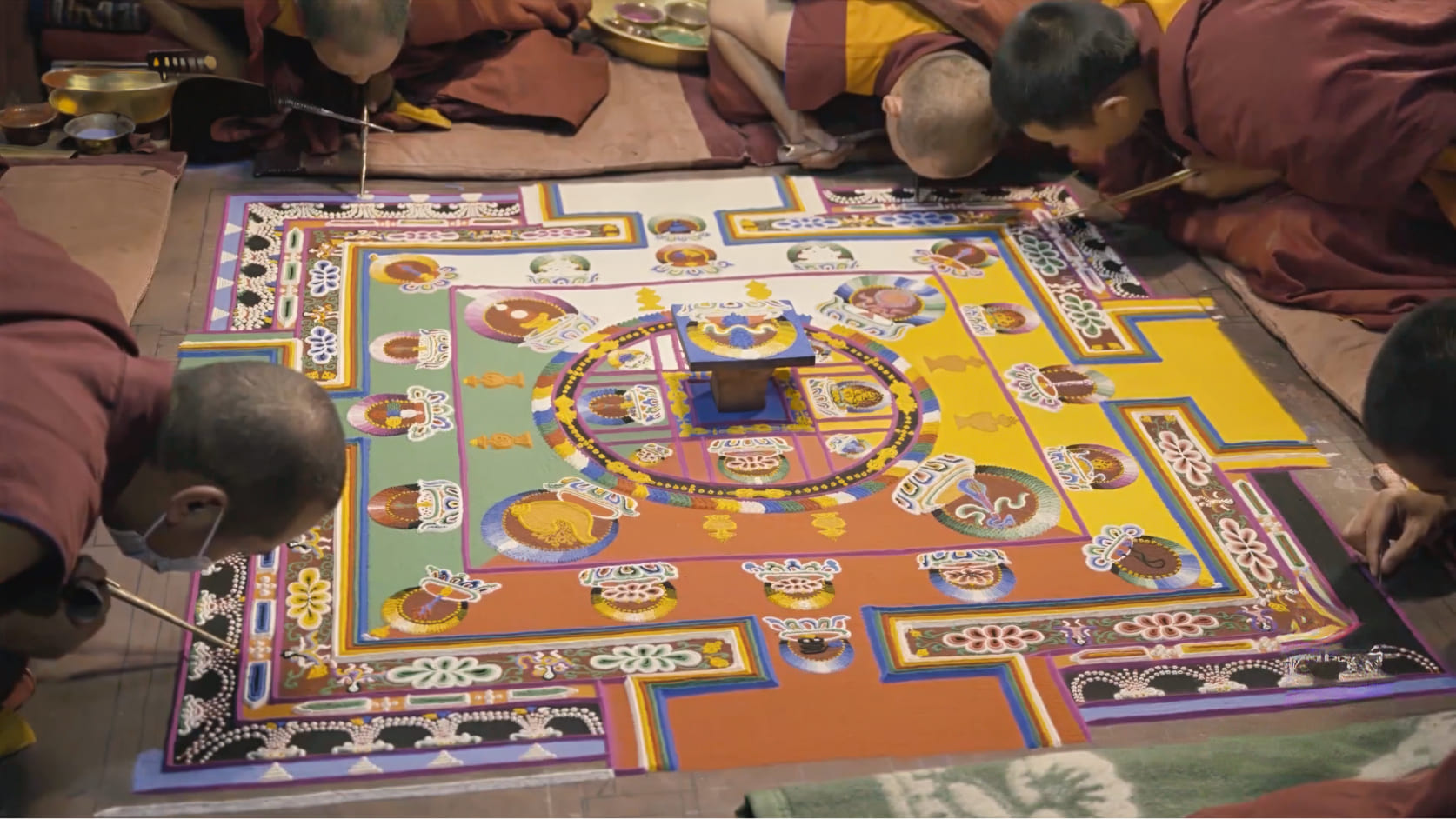
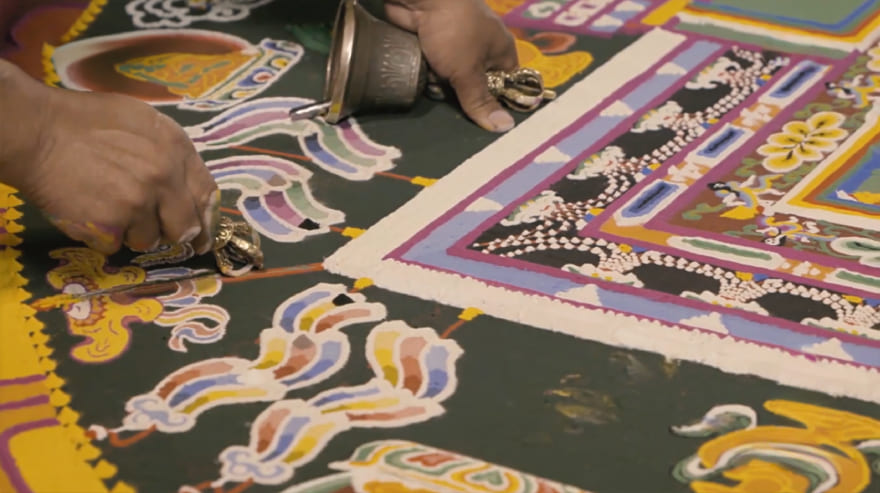
Using traditional metal funnels known as chak-pur, monks gently guide colored sand onto the surface, grain by grain. Working with remarkable concentration and steady hands, they gradually bring the design to life through countless tiny movements.

Construction begins at the center of the mandala and expands outward in ever-increasing layers of detail. A single mandala may require a dozen trained monks working in close coordination over the course of five to seven days.

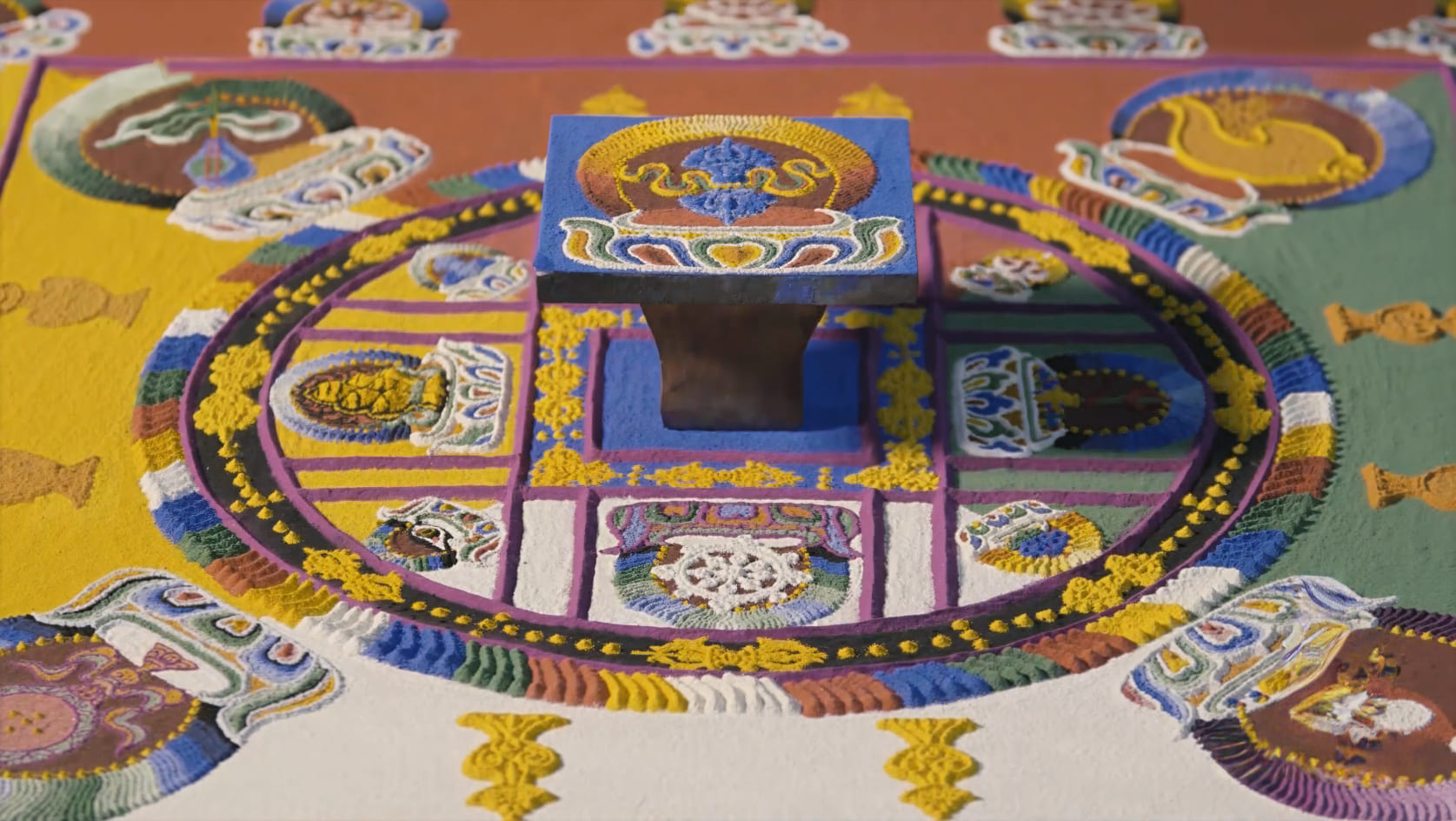
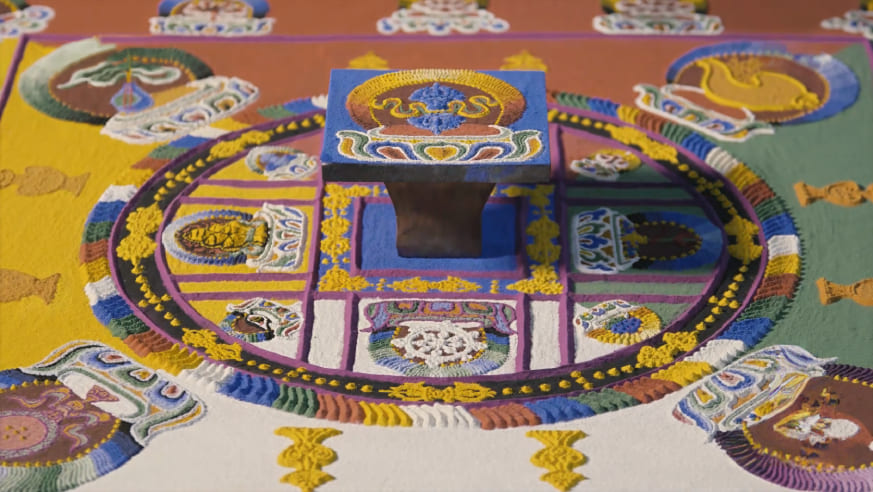
The completed mandala is both a work of sacred art and a symbolic representation of an enlightened universe. Rich with layers of meaning, it serves as a visual expression of harmony, wisdom, compassion, and the path to awakening.

Constructing the Mandala

The Process

Sacred Geometry

The design is measured with precision.

Drawing the Framework

The geometric structure is carefully mapped.

Applying Colored Sand

Sand is placed grain by grain using chak-pur with focused concentration.

Completed Mandala

A sacred universe comes into being.

Establishing the Sacred Geometry

Ragya monks establishing the sacred geometry of a sand mandala.
Establishing the Sacred Geometry

The creation of a sand mandala is both an artistic and spiritual practice.

The process begins with the careful layout of an intricate geometric design based on traditional measurements preserved in Tibetan Buddhist tantric texts. Every line, proportion, and symbolic element must be precisely positioned before the placement of a single grain of colored sand.

Placing the Colored Sand

Using traditional metal funnels known as chak-pur, monks gently guide colored sand onto the surface, grain by grain. Working with remarkable concentration and steady hands, they gradually bring the design to life through countless tiny movements.

Placing the Colored Sand2

Using traditional metal funnels known as chak-pur, Ragya monks carefully apply colored sand to the mandala. Image courtesy of CCTV, About the Great Rivers documentary.
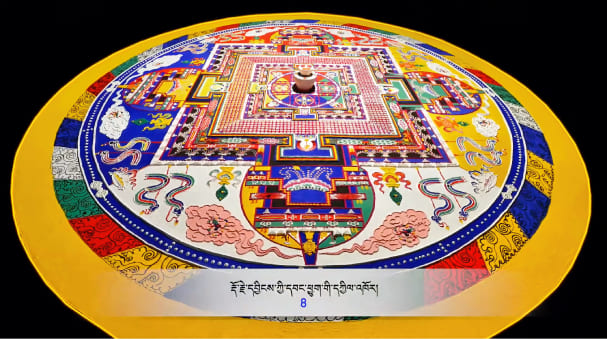
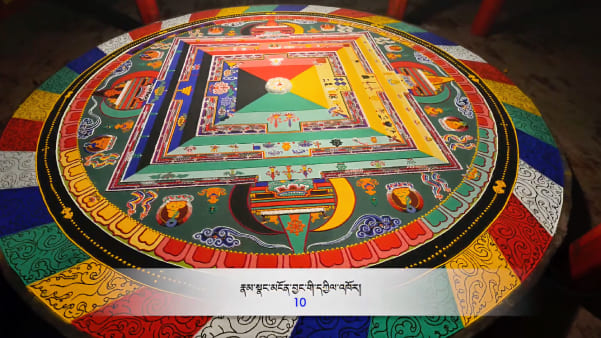
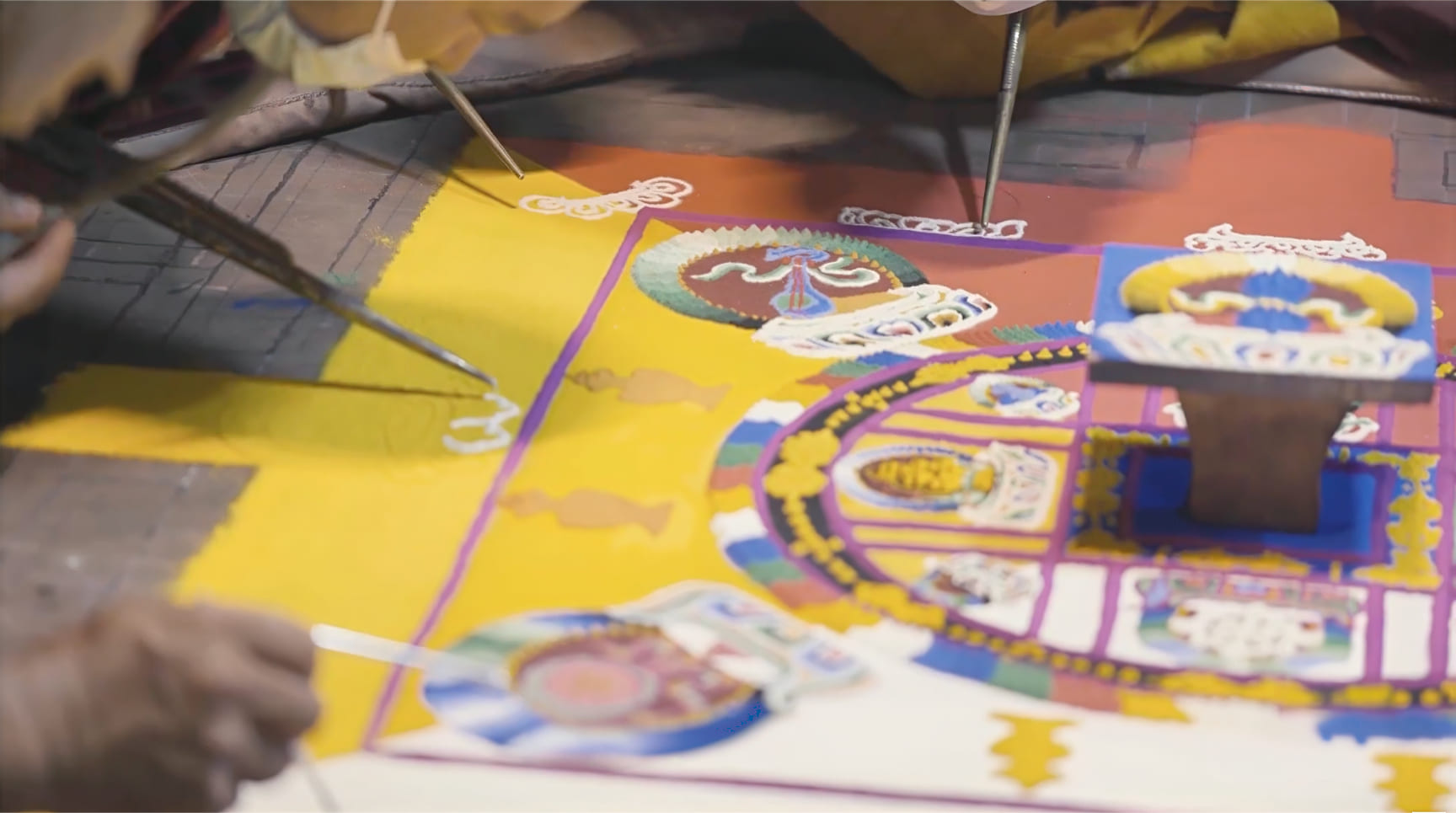
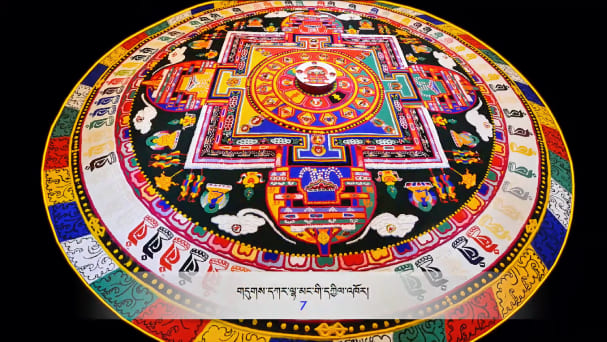
The Mandala Emerges2

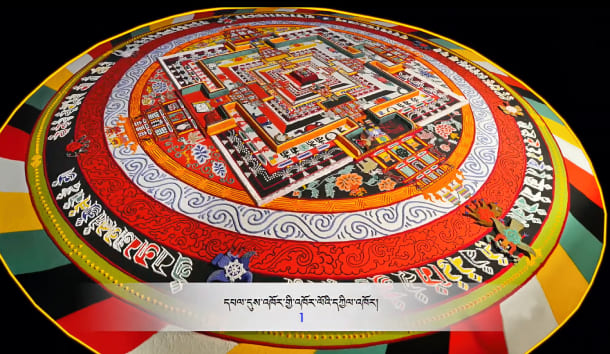
Close-up of the Guhyasamāja Mandala created by Ragya monks. Image courtesy of CCTV, About the Great Rivers documentary.

The Mandala Emerges

Construction begins at the center of the mandala and expands outward in ever-increasing layers of detail. A single mandala may require a dozen trained monks working in close coordination over the course of five to seven days.

The completed mandala is both a work of sacred art and a symbolic representation of an enlightened universe. Rich with layers of meaning, it serves as a visual expression of harmony, wisdom, compassion, and the path to awakening.

These sands will carry the brilliance of the mandala, but they will also reveal its fragility.

Fifteen Mandalas Each Year

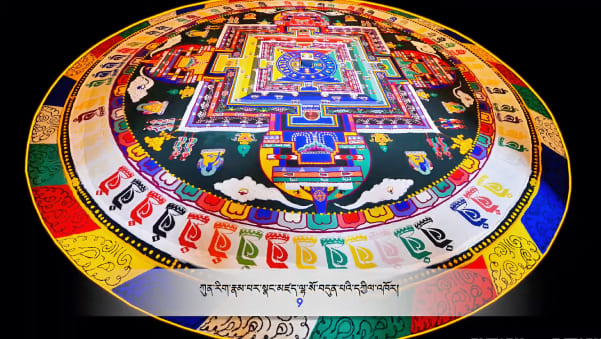
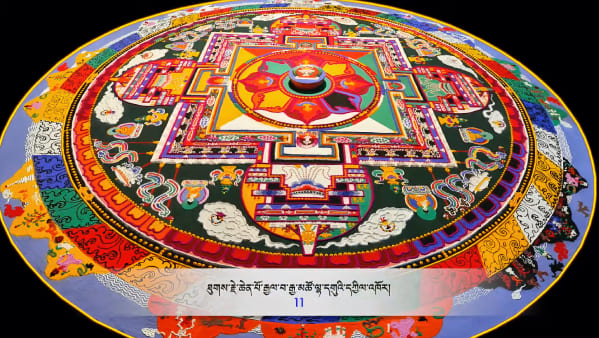
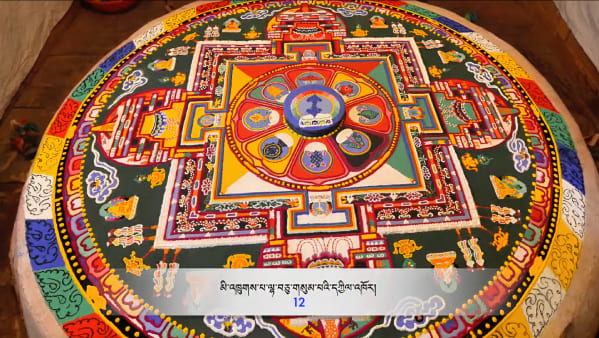
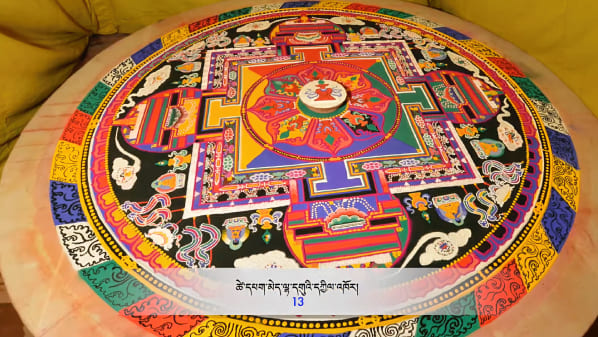
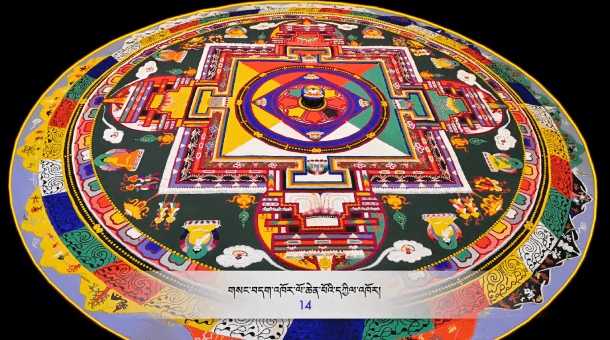
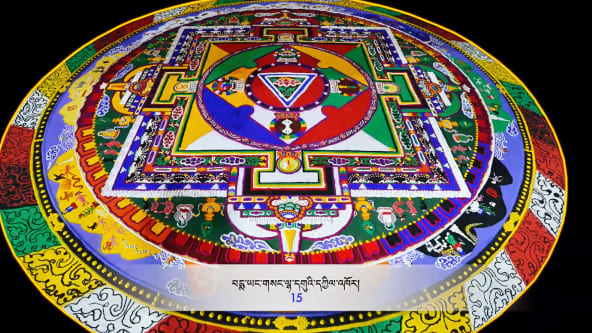
Each year, Ragya monks creates fifteen major sand mandalas as part of the Great Annual Drubchö established by the Seventh Shingza Rinpoche in 1806.

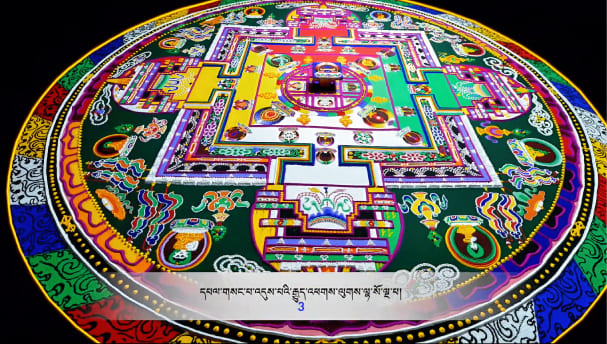
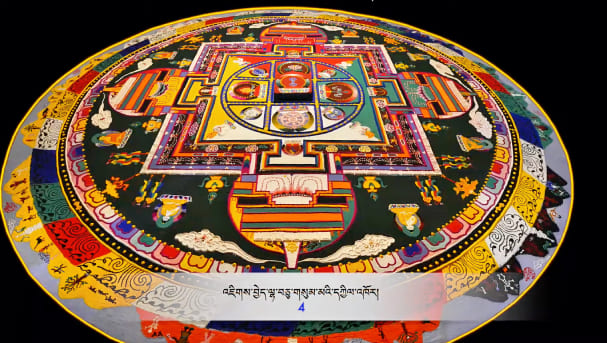
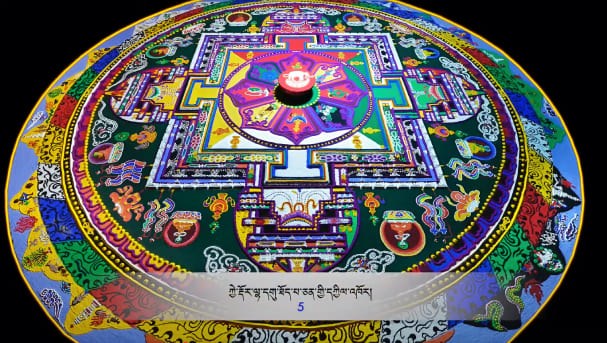
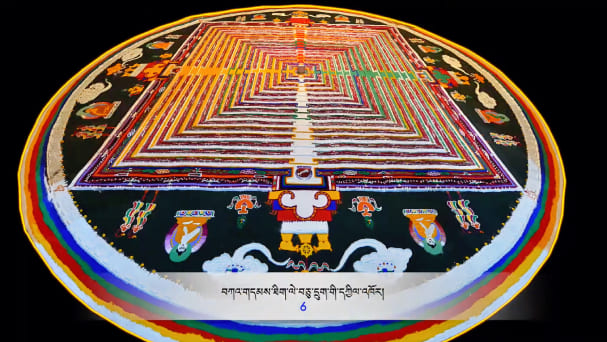
Together, they present a wide range of tantric traditions preserved within Tibetan Buddhism and form one of the most extensive living sand mandala traditions still practiced today.

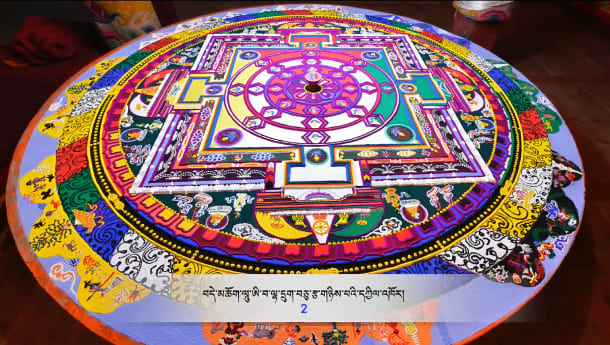
The fifteen sand mandalas of Ragya Monastery

Beginning in the eighth day of the third Tibetan lunar month, monks construct a series of sand mandalas while performing the associated rituals, meditative practices, and ceremonial observances.The creation of each mandala is accompanied by prayers, offerings, and traditional tantric practices preserved within the lineage of Ragya Monastery.

The cycle continues through the fourteenth day of the month, culminating on the fifteenth day with fire offerings and concluding ceremonies.

Through the dedication of generations of monks, the fifteen mandalas remain a living expression of the artistic, spiritual, and cultural heritage established by the Seventh Shingza Rinpoche and preserved at Ragya Monastery to this day.

The Teaching of Impermanence

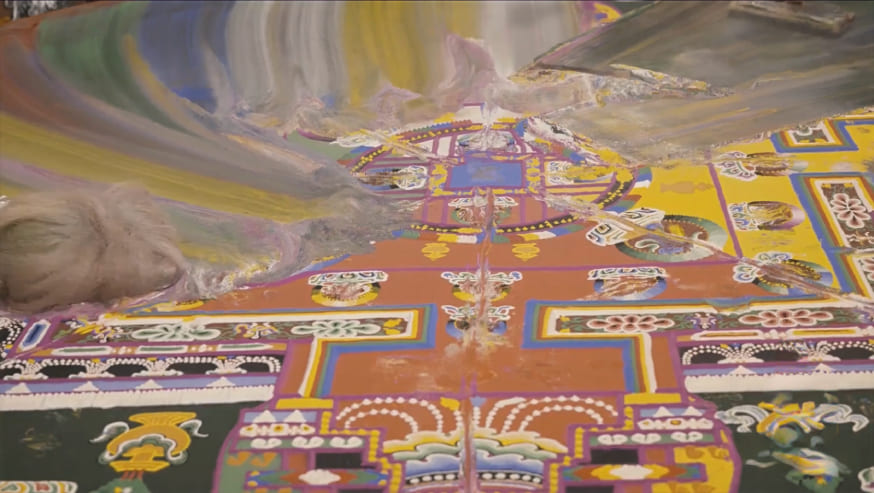
After two weeks of painstaking work, the mandala is dismantled.

The same hands that carefully placed each grain of colored sand now sweep the mandala away. What took days to create gradually disappears in a matter of moments.

In Tibetan Buddhism, this is not considered destruction, but an essential part of the practice. The dismantling of the mandala serves as a reminder that all things arise through causes and conditions, change over time, and eventually pass away.

Teaching of Impermanence
Teaching of Impermanence2

The beauty of the mandala lies not only in its creation, but also in its impermanence.

Returning to the Yellow River

The story of the mandala does not end inside Ragya Monastery.

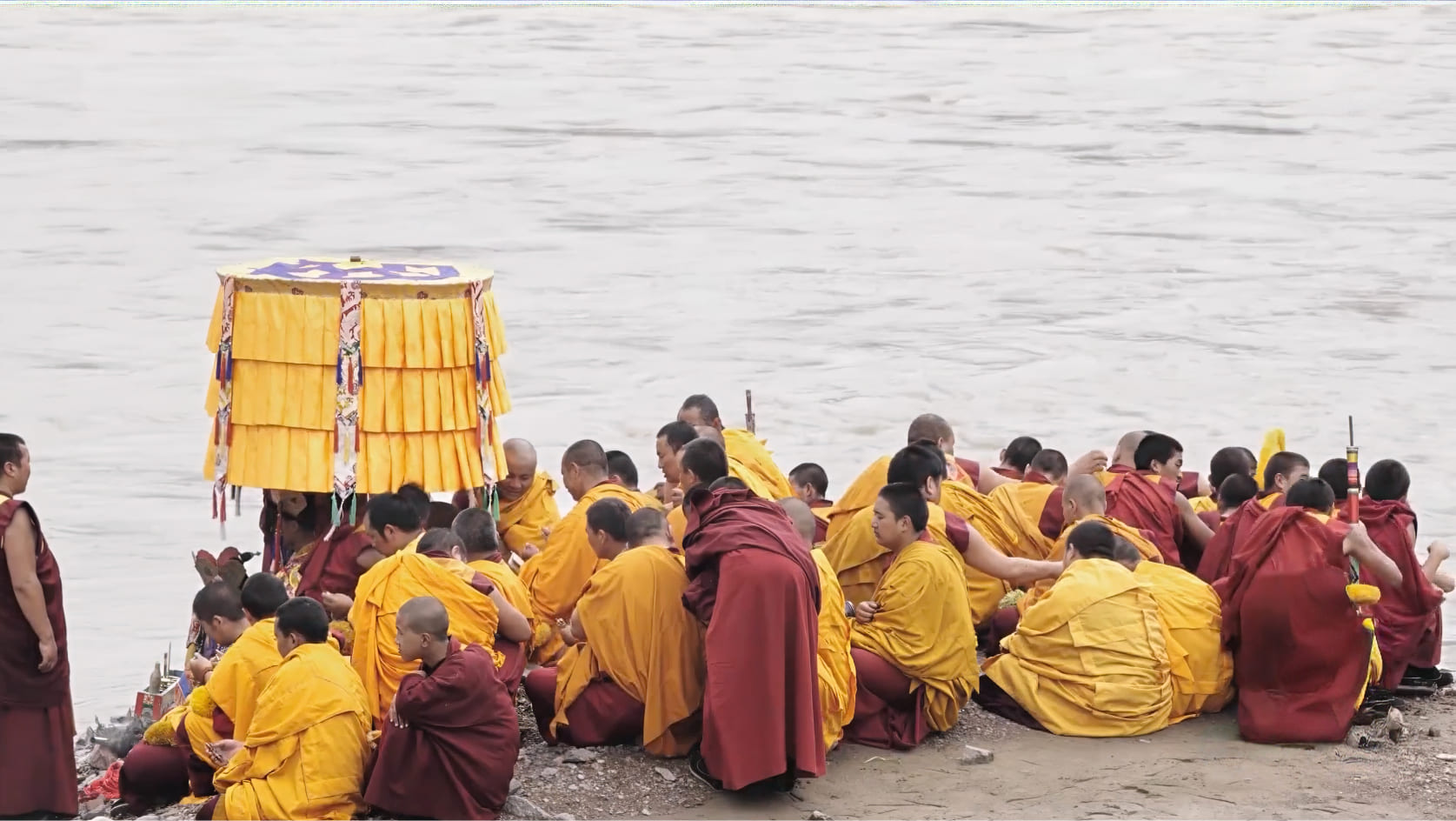
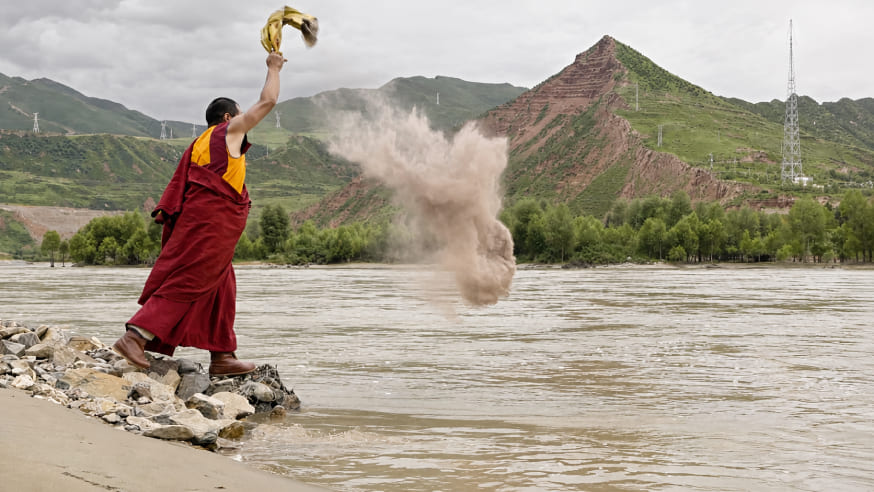
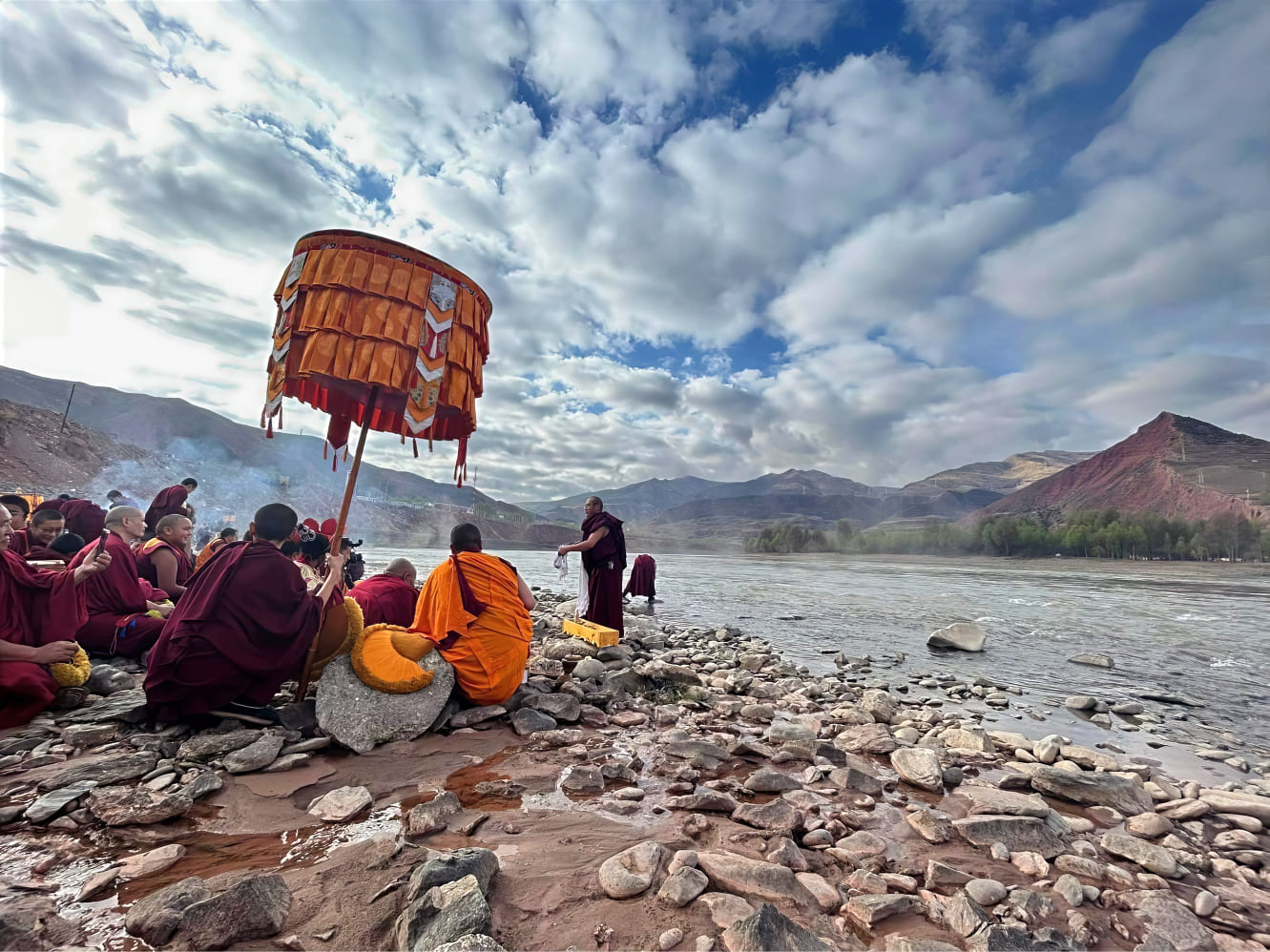
The wildflowers gathered from the mountains, the minerals drawn from the earth, and the precious stones transformed into color are returned to the natural world from which they came. The sands are gently released into the flowing waters, carrying with them the prayers and aspirations accumulated throughout the ceremony.

Returning to the Yellow River

Following the completion of the ceremonies, the colored sands are carried in procession to the Yellow River, known in Tibetan as Machu.

From Nature, Back to Nature

Thus, the mandala completes its journey—from nature, through sacred art, and back to nature once again. What began as flowers blooming on distant mountainsides and stones resting within the earth is returned to The Machu River that flows through the Tibetan Plateau, completing a cycle that has been preserved for more than two centuries.

Returning to the Yellow River2
Returning to the Yellow River3

Watch the Tradition Come to Life

About the Great Rivers (CCTV)

This documentary follows Ragya monks through the entire process of creating the annual sand mandalas, from gathering flowers and minerals in the mountains to the final offering of the sands into the Yellow River.

Video Thumbnail